




2026 World Cup Host Cities: Your Travel Roadmap

Author

Fact checker Daniela Stoeva
 14 Jul 2026
As the 2026 World Cup host cities fire up across the USA, Canada and Mexico, 48 teams will play 104 matches from 11 June to 19 July. This isn’t just a list of venues; it’s a betting roadmap where crowd noise, altitude and humidity can twist lines tighter than a last‑minute Small Heath downpour.
By the time you finish this guide, you’ll know which cities suit, and why some fan‑zones are pure value, while others just bleed commission.

Bookmark this alongside our Complete Guide to the 16 World Cup Stadiums if you want venues, capacities and pitch‑type clutter in one place.
The 16 Cities at a Glance
Below is a quick scan of the 16 host cities, their stadiums, and headline fixtures. All kit and match counts line up with the official FIFA World Cup 2026 schedule (104 games, 48 teams, three countries). For World Cup 2026 Betting angles, see our separate guide
Mexico (3 Host Cities, 13 Games)
| City | Quick Fact | World Cup Stadium | Key Matches |
|---|---|---|---|
Mexico City | Largest city in North America | Azteca | Opener (11 June), Mexico‑group games |
Monterrey | Mountain backdrop and strong food scene | BBVA | Group‑stage fixtures |
Guadalajara | Home of mariachi and tequila culture | Akron | Group‑stage games |
- Mexico City hosts the opening game, Mexico vs South Africa, on 11 June at Estadio Azteca, a venue with a long history at high altitude (around 2,240 m).
- Monterrey and Guadalajara each get multiple group‑stage matches, with Monterrey’s BBVA especially exposed to heat and humidity.
Canada (2 Host Cities, 13 Games)
| City | Quick Fact | Stadium | Key Matches |
|---|---|---|---|
Toronto | One of the world’s most diverse cities | BMO Field | Canada opener 12 Jun, group games |
Vancouver | Seaside city with mountains nearby | BC Place | Group stage matches |
- Toronto and Vancouver split Canada’s 13 World Cup matches, with Toronto’s BMO Field expected to host the Canada opener on 12 June.
- Vancouver’s BC Place is a covered stadium that can be read as more draw‑friendly in mid‑tier clashes, especially under the roof.
USA (11 Host Cities, 78 Games)
| City | Quick Fact | Stadium | Key Games |
|---|---|---|---|
Atlanta | Huge airport hub with a lively downtown | Mercedes-Benz Stadium | Semi-final 15 Jul, group games, knockout round |
Boston | Historic East Coast city with strong fan appeal | Gillette Stadium | Quarter final 9 Jul, group games |
Dallas | Big Texas city known for scale and barbecue | AT&T Stadium | Semi-final 14 Jul, Group games, knockout round |
Houston | One of the most diverse cities in the US | NRG Stadium | Group games |
Kansas City | Famous for barbecue and football culture | Arrowhead Stadium | Quarter final 11 Jul, group games |
Los Angeles | Global entertainment capital | SoFi Stadium | USA opener 12 Jun, quarter final 10 Jul, Group games, knockout round |
Miami | One of the most diverse cities in the world | Hard Rock Stadium | Bronze final 18 Jul, quarter final 11 Jul, group games |
New York/New Jersey | Final venue with skyline energy | MetLife Stadium | FIFA World Cup Final 19 Jul, knockout round |
Philadelphia | Historic city with a strong sports identity | Lincoln Financial Field | Group games |
San Francisco Bay Area | Tech-heavy West Coast base with easy fan travel | Levi's Stadium | Group games |
Seattle | Rainy, green and fiercely football-friendly | Lumen Field | Group games |
- The USA hosts 78 of the 104 World Cup games, with all 11 cities lining up for the official venue list
- The final kicks off on 19 July at MetLife Stadium in New York/New Jersey, chosen as the neutral‑site showpiece
US Powerhouses: Heat & Home Boosts
The USA hosts the bulk of the 2026 World Cup, with 11 host cities across the East, Midwest and West coasts sharing 78 matches, making it the tournament’s betting and fan tourism engine.
The United States hosted the FIFA World Cup once before, in 1994, with a 24-team format spread across nine cities that still shapes how the US market builds around big football scares.
From Atlanta dome roar and Dallas Texan scale to Seattle coastal rain and Miami heat sweat, the US slice of the draw is a weather, stadium type, and crowd noise lab, with a few cities doubling as team‑base‑camp hubs.
Atlanta: dome roar and southern heat
Atlanta’s Mercedes‑Benz Stadium sits in the heart of a “City in a Forest” vibe, where the retractable‑roof bowl, the downtown skyline and the BeltLine‑linked green spine come together for a big‑screen plus southern‑hospitality show.
Population & scale
- Atlanta city population (2026): around 510k to 530k, with recent projections hovering near 530,106.
- Metro Atlanta: roughly 5.3 million across 11 counties, making it a major US-Southeast hub.
Transit & access
- MARTA (rail and bus) feeds the stadium directly, with GWCC/CNN Centre and Vine City stations sitting right on the doorstep of Mercedes‑Benz Stadium.
- Hartsfield‑Jackson Atlanta International (ATL) is one of the world’s busiest airports, feeding strong domestic‑US and transatlantic links for a UK‑leaning pilgrimage route.
Vibe & food before the game
- Fox Bros BBQ joints (brisket, ribs, wings, “everything” plates) are the pre‑match‑default, with the original Decatur‑Avenue spot and satellite‑style outlets built around the city‑fringe vibe.
- SweetWater‑style IPAs and the wider BeltLine‑linked brewery and bar scene feed the late-day pint run, from Old Fourth Ward to the downtown stadium zone.
Why fans will like it
Atlanta has the feel of a proper event city. It is busy, walkable in pockets, and built for a full day out rather than just a quick in-and-out match. That makes it one of the easier cities to sell to travelling fans.
Quick fan facts
- Mercedes-Benz Stadium has a retractable roof, so matchday conditions can shift fast.
- The stadium zone is close to downtown, which makes pre- and post-match movement easier.
- Atlanta’s airport makes it one of the simplest US host cities to reach.
Boston: cold side of the coast support
Boston brings a sharper, colder edge than many of the other host cities. Gillette Stadium is down in Foxborough, so the matchday experience is really a Greater Boston one, with the city itself acting as the launch point for the trip.
Population & scale
- Boston city population (2026): around 670k to 675k.
- Greater Boston metro: roughly 4.9 million, anchoring the US Northeast Atlantic corridor.
Transit & access
- MBTA (“the T”) handles subway, bus, commuter rail and ferries, with the Red Line and Commuter Rail feeding Gillette‑linked park and ride routes.
- Logan International Airport feeds short‑haul US‑East‑coast‑hubs and transatlantic connectors, making Boston a solid landing spot for UK‑leaning fans.
Vibe & food before the game
- Fish‑shack seafood joints dominate the pre‑match run‑up, with clam chowder, fish and chips and lobster roll plus beer combos the default Boston‑sling.
- Celtics downtown pub runs, and Fenway‑adjacent boil and sauce house grub give the city a compact stadium plus bar crawl vibe.
Why fans will like it
Boston has a strong old-school sporting identity, which gives the trip a different feel from the flashier host cities. It is less about big noise and more about tradition, walkable neighbourhoods and a city that already knows how to host sports fans.
Quick fan facts
- Gillette Stadium is outside the city in Foxborough, not downtown Boston.
- Logan Airport is one of the easiest arrival points for UK visitors.
- Seafood and pub culture are both easy wins for matchday eating.
Dallas: Big Texas energy and barbecue country
Dallas feels huge before you even get to the stadium. AT&T Stadium is out in Arlington rather than downtown, which gives the whole thing a more spread-out Texas feel and a proper "build your day around the match" vibe.
Population & scale
- Dallas city population (2026): roughly 1.3 million.
- Dallas - Fort Worth metro: around 7.8 million, making it one of the largest US‑Southeast hubs.
Transit & access
- DART (Dallas Area Rapid Transit) runs light rail, buses, and streetcar routes across the metro, with several lines feeding the stadium, as well as adjacent commuter rail and park-and-ride links.
- Dallas/Fort Worth International Airport (DFW) is one of the world’s busiest air hubs, with short-haul links to most UK‑style long‑haul hubs.
Vibe & food before the game
- BBQ halls like Terry Black’s and Baby Back Shak plate ribs, brisket and sides that feel like a proper barbecue bible, with lines forming well before kick‑off.
- Deep Ellum bars, and Tex‑Mex joints, plus brown ales and local IPAs, give the pre‑match run‑up a “drive‑through Texas” flavour.
Why fans will like it
Dallas is a good host city if you like big, simple, high-energy sporting days. It is less about wandering a tight city centre and more about scale, space and a full Texas sports experience. That gives it a different rhythm from the East Coast cities.
Quick fan facts
- AT&T Stadium is in Arlington, not central Dallas.
- DFW is one of the busiest airport hubs in the world.
- The city works best if fans plan ahead for transport and food rather than leaving everything to chance.
Houston: Texas heat and a city that keeps moving
Houston feels big, busy and unfussy, which suits a World Cup host city just fine. NRG Stadium sits in a part of town that makes the whole matchday feel like a proper event, but the city itself has enough going on to make this more than a stadium stop.
Population & scale
- Houston city population (2026): roughly 2.3 million, one of the largest US cities.
- Metro Houston: close to 7 million, anchored by the fourth‑largest US metro economy.
Transit & access
- METRO covers bus, light‑rail and park‑and‑ride routes, with the Red Line and METRO Rail feeding satellite‑parking schemes around NRG.
- Houston airports (IAH/George Bush) and the highway‑linked infrastructure make Houston an easy in-and-out hub for cross-country-style fan tours.
Vibe & food before the game
- Space‑City‑linked bars and NASA shuttle theme joints cluster around Montrose and Midtown, with a bar-crawl-friendly density.
- Crawfish boils, Tex‑Mex and Vietnamese pho joints give the food run a “dive‑in any counter you like” flexibility; the city’s diversity runs deep beyond the steak‑house cliché.
Why fans will like it
Houston is a city for fans who want variety. It is not polished in the same way as some host cities, but it is full of character, and that gives it a strong identity. The mix of food, sprawl and summer heat should make it feel properly different from the cooler northern stops.
Quick fan facts
- Houston is one of the largest cities in the US by population.
- The metro economy is among the biggest in the country.
- The city’s diversity is a big part of its appeal for travelling fans.
Kansas City: base camp hub and Midwestern grind
Kansas City is one of the more interesting host cities because it punches above its weight. The wider metro is the important bit here, and the region has ended up as a genuine World Cup base camp hub rather than just a match venue.
Population & scale
- Kansas City metro population (2026): roughly 2.3 to 2.4 million across the two‑state spread (Kansas/Missouri).
- The city itself sits around 150k to 160k, depending on the side you’re on, but the wider metro is the real draw.
Transit & access
- RideKC (buses, streetcar, city‑bikes) and the surrounding highway‑link‑system make Arrowhead access heavily car-/park-and-ride-centric.
- Kansas City International Airport (MCI) and St. Louis‑linked rail connect the city to broader US Midwest hub routes, making it a solid in-between stop for long-haul sloggers.
Vibe & food before the game
- BBQ‑capital bragging rights define the city’s food identity, with smoked brisket, burnt ends, and pulled pork plus sauce-dipped bread sandwiches as the default pre‑match fuel.
- Jazz‑bar‑side clubs and brewery‑linked joints give the city an after-dark swing scene to offset the late June day grind.
Why fans will like it
Kansas City has a grounded, unfussy feel that suits fans who want football first and everything else second. It is not trying to be Miami or Los Angeles, and that is part of the appeal. The city’s role as a base camp hub also means it should attract a lot of travelling supporters and team staff, which gives it extra tournament relevance.
Quick fan facts
- Kansas City is split across Missouri and Kansas.
- The wider metro is the important scale marker, not the city centre.
- It has become a major base camp location for the tournament.
Los Angeles: cinematic spread and late-night grind
Los Angeles is less of a single city and more of a sprawl of neighbourhoods, freeways and distinct mini-scenes. That gives it a very different feel from the tighter East Coast or Midwest host cities, and it makes the trip feel more like a full break than a one-stop visit.
Population & scale
- Los Angeles city population (2026): around 3.87 million.
- Greater LA metro: close to 13 million, making it one of the largest US coastal hubs.
Transit & access
- Metro Rail/bus network feeds into the wider LA area park and ride mesh, with express shuttle-style links to the Inglewood-SoFi catchment.
- LAX is the main gateway, with a dense web of domestic and transatlantic-capable hubs; the airport-to-stadium slog is better handled via shuttle bus or rideshare than pure rail.
Vibe & food before the game
- LA‑style food‑spread dominates: taco‑stands, Korean‑BBQ, LA‑Philly fusion‑burgers and Hollywood strip Dive pint bars all live within driving distance of the stadium.
- The city feels like a collection of neighbourhoods knitted together by freeways, so you can easily pick a food zone (Koreatown, DTLA, Westside) and treat it as your mini-festival within the city.
Why fans will like it
Los Angeles is ideal for fans who want atmosphere and variety rather than one neat centre. It has the biggest showbiz energy of any host city and enough food, nightlife and local identity to keep the day moving long after the final whistle.
Quick fan facts
- Los Angeles is really a region of connected neighbourhoods rather than one compact city centre.
- LAX makes it one of the easiest major arrival points on the West Coast.
- Matchday planning matters because distances are bigger than they look on the map.
Miami: coastal heat and Latin flavour
Miami feels like the tournament’s most summer-ready stop. It has beach energy, Latin influence and a nightlife scene that already knows how to handle big crowds, which should make the World Cup feel more like a festival than a commute.
Population & scale
- Miami city population (2026): around 509k.
- Metro Miami‑Dade (Miami‑area): close to 2.8 million, anchoring the US-Southeast-Caribbean hub.
Transit & access
- Miami Metrorail (elevated‑rail line with 22 stations) and Metrobus form the public spine, with park-and-ride style links to the stadium catchment.
- Miami International Airport (MIA) serves strong transatlantic and Latin American hub routes, making Miami a natural landing spot for Euro-plus South American-style pilgrimages.
Vibe & food before the game
- Cuban sandwiches, cafecito‑shot bars and Little Havana joints dictate the pre‑match pulse, with a late-in-the-day heat plus espresso‑dash feel.
- The South Beach hook and Little Havana dive split means you can either ride the coastal party vibe or the inner city street food buzz before the kick‑off roar.
Why fans will like it
Miami is built for people who want sun, food and a bit of noise around the football. It has enough character to feel different from the northern stops, and the mix of beach culture and Latin American influence gives it a unique tournament identity.
Quick fan facts
- Miami International is one of the best-connected arrival points for international fans.
- The city works well for fans who want a mix of city break and match trip.
- Heat and humidity are part of the Miami experience, so daytime matches will feel very different from cooler venues.
New York/New Jersey: Big Apple access and final-stage buzz
New York/New Jersey brings the biggest-stage feel of any host area. The final will be played at MetLife Stadium in East Rutherford, but the wider metro gives the whole trip a huge city-break feel, with Manhattan, Jersey and the commuter belt all feeding the matchday buzz.
Population & scale
- Metro‑NYC (including NJ‑side hubs) runs at roughly 19 to 20 million, making it one of the largest urban clusters in the US.
- The immediate New Jersey surroundings are less dense, but the commuting rail links keep the city's feel in sharp focus.
Transit & access
- NJ Transit and Metro‑North rail lines feed into the MetLife-linked Meadowlands Complex park and ride ecosystem, with shuttle bus-style kick-off runs.
- New York City‑area airports (JFK, LGA, EWR) and Penn Station‑linked commuter rail make the city slice an easy in and out for the neutral site final pilgrimage.
Vibe & food before the game
- NYC pizza slices, pastrami bun dining trucks and multiplex bar crawls dominate the pre‑match run‑up, with a Gotham-sque spectrum of “get in a slice and run” joints.
- The Meadowlands side bar cluster, plus the ability to nip into the city for a quick beer run, gives the location a “neutral site but crowd imported” vibe.
Why fans will like it
The World Cup final gives this location extra gravity, and the mix of skyline, suburb and late-stage pressure should make it feel properly dramatic. It is a good fit for fans who want a huge occasion without giving up city access and nightlife.
Quick fan facts
- The final is scheduled for 19 July at MetLife Stadium.
- FIFA will refer to the venue as New York/New Jersey Stadium during the tournament.
- The wider metro gives fans much more to do than just matchday travel.
Philadelphia: rowdy street corner cauldron
Philadelphia has the sort of old-school sports energy that suits a World Cup perfectly. South Philly is dense, loud and full of personality, so the matchday feel should come across as more city-grit than polished spectacle.
Population & scale
- Philadelphia city population (2026): roughly 1.56 to 1.58 million.
- Metro Philadelphia sits around 6.2 million, anchoring the US‑Northeast‑Capital‑Corridor.
Transit & access
- SEPTA (subway‑plus‑commuter‑rail) feeds the South Philly zone, with Broad Street Line and Sports Complex linked shuttle stops handy for match-day runs.
- Philadelphia International Airport (PHL) and Amtrak linked rail make Philly an easy in and out for East Coast sloggers.
Vibe & food before the game
- Cheesesteak culture joints and Philly hoagie stands are the default food run-up: think Pat’s vs Geno’s rivalry vibes within a 10-minute walk.
- Old City Brewery-linked bars and pizza slice trucks give the city a compact walk, drink, and eat loop, with the stadium zone feeding into a genuine “city within a city” festival feel.
Why fans will like it
Philadelphia has that raw, noisy, no-nonsense feel that many travelling fans love. It is compact enough to make a day of it, but gritty enough to feel distinct from the smoother, more tourist-led host cities.
Quick fan facts
- South Philly is where the stadium district really lives.
- The city is strong for food, bars and short hops between stops.
- The crowd culture is likely to give the city a real edge on match day.
San Francisco Bay Area: food slingers and late‑night pesto
The Bay Area gives this World Cup stop a slower, more spread-out feel than the tighter East Coast cities. Levi's Stadium is down in Santa Clara, so the trip is really about the wider Bay Area rather than San Francisco proper, with food, travel and neighbourhood choice all shaping the experience.
Population & scale
- San Francisco city population (2026): around 815k to 820k.
- Bay Area Metro (including Oakland, San Jose): close to 7.8 to 8.0 million, making it a major West Coast hub cluster.
Transit & access
- BART/Caltrain and regional bus networks feed the wider catchment, with park-and-ride shuttle services handling the final leg to Levi’s.
- San Francisco International Airport (SFO) and SJC linked shuttles make the city area slightly inconvenient but manageable for late June pilgrimages.
Vibe & food before the game
- Bay Area Mexican plus Chinatown fusion grub dominates the pre‑match food run: think burrito slabs, mission taquerias and sourdough-plus-dumplings joints.
- The Bay Area brew plus Viet plus Thai plus seafood mix gives the city slice a “throw at the wall and see what sticks” food vibe, with plenty of late-opening bars for the post-match amble.
Why fans will like it
The Bay Area works well for fans who want good food, a bit of scenery and a more laid-back tournament stop. It is not the easiest place to move around, but it rewards planning and gives visitors enough neighbourhood character to make a real trip of it.
Quick fan facts
- Levi's Stadium is in Santa Clara, not San Francisco.
- SFO is the main long-haul airport for the region.
- The Bay Area’s spread means the right hotel choice matters more here than in most host cities.
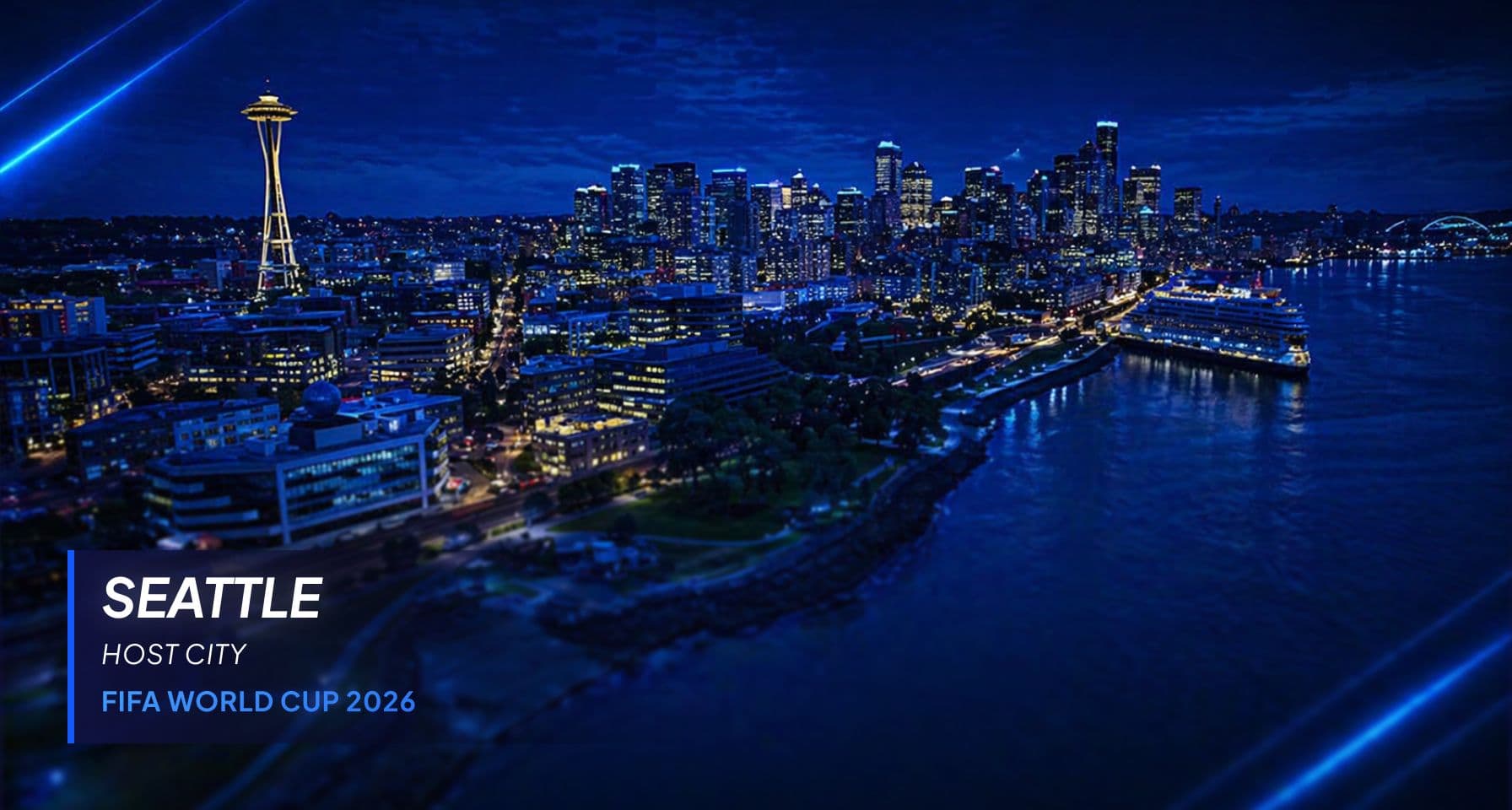
Seattle: rain and waterfront energy
Seattle gives the World Cup a proper Pacific Northwest backdrop. Lumen Field sits just south of downtown in SODO, so the matchday feel should come across as city-centre accessible, rainy and loud rather than remote or suburban.
Population & scale
- Seattle city population (2026): around 800k, with recent estimates putting the 2025 to 26 range just above 800,000.
- Seattle metropolitan area: close to 4 million, anchoring the US Northwest Pacific hub.
Transit & access
- Sound Transit Link light rail (1 Line), Sounder commuter trains, and King County Metro buses feed the stadium zone, with stations such as International District/Chinatown and SODO within a short walk of Lumen Field.
- King Street Station (rail hub) and downtown Seattle-linked bus runs make the stadium feel like a 10 to 15-minute stroll from the city core, even if you’re arriving from surrounding suburbs.
Vibe & food before the game
- Pacific Northwest seafood joints dominate the pre‑match food run: think clam chowder in a bread bowl, Dungeness crab plus fish and chips joints and waterfront sitting seafood houses.
- The Seattle rain plus craft beer scene combo gives the city a “grab a jacket and a pint and walk” feel, with Capitol Hill-style bars, Ballard district brewpubs, and stadium‑adjacent food trucks splitting the run‑up charge.
Why fans will like it
Seattle is a great fit for fans who like atmosphere, scenery and a city that already knows how to host loud sporting occasions. The weather should add a bit of mood, while the downtown access keeps the day moving instead of turning into a transport chore.
Quick fan facts
- Lumen Field is one of the loudest venues in North American sports.
- June in Seattle can still bring cool, damp conditions.
- The stadium is close enough to downtown to make walking part of the experience.
Canada's Cool Edges: Walkable Grub Hubs
Canada adds two 2026 World Cup host cities to the map: Toronto and Vancouver, both built around walkable, rail-linked hubs and a multicultural food grub spine.
Canada has never hosted a men’s FIFA World Cup before, so 2026 marks the first time the country steps into the tournament centre stage as a full‑host nation.
Together, Toronto and Vancouver split 13 matches, with the Canadian side of the draw leaning into the chill evening breezes, coastal rain seal and roof, and a “second city citizenship” vibe that’s easy on UK-leaning fans.
The city blocks that follow focus on population, public transit, food style, and crowd temperature rather than the bowls themselves, so you can see how the betting atmosphere shifts between Toronto chill poutine runs and Vancouver Seawall rain bender vibes.
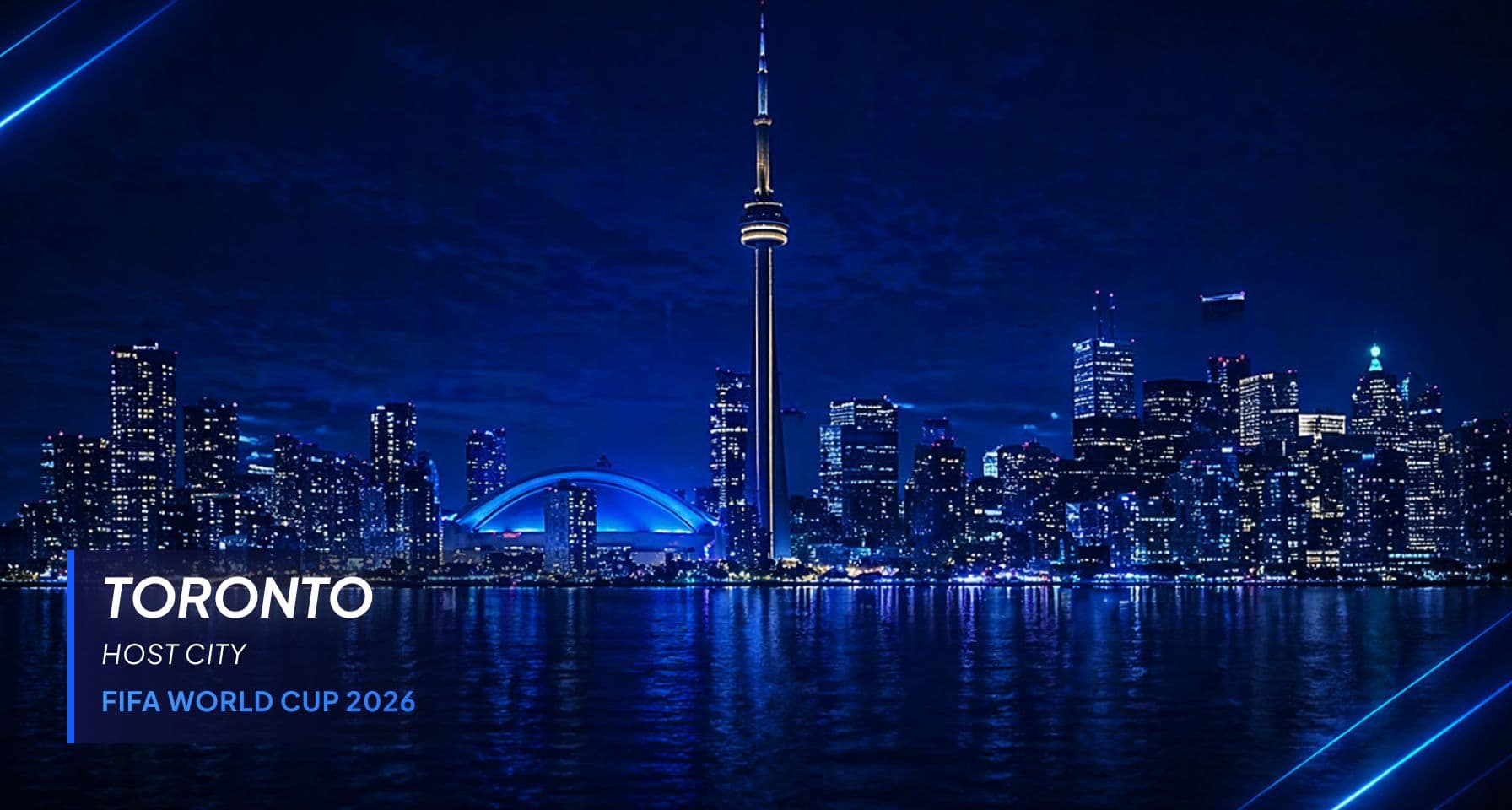
Toronto: chilly, multicultural money hub
Toronto gives the tournament a polished but properly diverse stop. BMO Field sits at Exhibition Place on the lakefront, so the city feels close to the water, close to downtown and easy to frame as a fan-friendly base.
Population & scale
- Toronto city population (2026): roughly 3.37 million.
- Greater Toronto Area (GTA): approaching 6.5 million, making it Canada’s largest urban cluster.
Transit & access
- The TTC (subway, streetcar, bus) is the core system, with several lines feeding Exhibition Place and the BMO adjacent GO Transit park-and-ride setup.
- Toronto Pearson International Airport (YYZ) is Canada’s busiest airport, with strong transatlantic connections for UK fans.
Vibe & food before the game
- Global plate cities come true in Toronto: poutine counters, dim sum parlours, birria tacos and Caribbean patties sit within a few blocks of each other.
- The Distillery District and Kensington Market offer a proper “pub plus street‑food” loop, with craft gin distillery runs and late-night food truck clusters.
Why fans will like it
Toronto feels like a proper city break as well as a football stop. It is organised, international and easy to tailor to different budgets, which makes it a strong fit for fans who want a broad, comfortable base.
Quick fan facts
- Toronto is Canada’s largest city.
- The GTA gives the city far more scale than the core numbers suggest.
- Exhibition Place is one of the easiest stadium zones for a fan day out.
Vancouver: coastal rain fortress
Vancouver brings a softer, more scenic kind of tournament stop. BC Place sits right in the downtown core, so fans get a proper city break with waterfront views, easy access and a weather-proof matchday base.
Population & scale
- Vancouver city population (2026): around 700k, with the Greater Vancouver metro edging towards 2.8 million.
- The metro is the largest in Western Canada and a major Pacific‑gateway hub.
Transit & access
- The SkyTrain network (Expo, Millennium, Canada Lines) links downtown, the airport, and the BC Place with frequent, easy-to-navigate trains.
- YVR (Vancouver International) is a compact, rail‑linked airport with strong transatlantic and Asian hub connectivity, ideal for long‑haul pilgrimages.
Vibe & food before the game
- Seawall bike paths and Granville Island pizza and seafood stalls give pre‑match strolls a coastal, laid-back feel.
- Steamers seafood, food truck Japadog stands, and craft brew paired pubs line the route in and out of the stadium, leaning into the “rain ignored, beer embraced” vibe.
Why fans will like it
Vancouver is a strong fit for fans who want scenery, food and a calmer pace. The roof at BC Place also means the weather should be part of the atmosphere without ruining the day, which is a neat balance for summer football.
Quick fan facts
- BC Place is right in downtown Vancouver.
- YVR is linked directly to the city by SkyTrain.
- The metro is the biggest in Western Canada.
Mexico Magic: Street Eats & Metro Madness
Mexico brings three 2026 World Cup host cities into the tournament’s heart: Mexico City, Guadalajara and Monterrey, each packing a different slice of altitude, history and street‑eat energy.
Mexico has hosted the FIFA World Cup twice before, in 1970 and 1986, both at Estadio Azteca, giving the country’s 2026 slice a familiar big-stage backdrop.
Between them, these hubs share 13 matches, including the opening‑match showdown at Estadio Azteca, giving visitors a mix of high‑altitude grind, tequila-fueled plazas and northern Mexico barbecue‑belt vibes.
Below, we break down the pop, metro‑scale, transit, food, and crowd atmosphere for each city.
Guadalajara: spring vibe and home edge heartland
Guadalajara brings a warmer, more traditional feel to the tournament. It is one of Mexico’s great football cities, but it also has a strong cultural identity of its own, which makes it feel more like a proper destination than just a match stop.
Population & scale
- Guadalajara metro population (2026): roughly 5.3 to 5.7 million, making it the third‑largest metro in Mexico.
- The city itself has a population of around 1.4 to 1.5 million.
Transit & access
- The local Metro de Guadalajara and feeder bus networks handle the city-wide grind, with shuttle match‑day links to the stadium area.
- Guadalajara International Airport (GDL) feeds regional‑hub routes and Mexican domestic chains.
Vibe & food before the game
- Mariachi plazas, tequila house bars and bright market stalls give the city centre a non‑stop carnival light pulse.
- Tortas ahogadas (drowned‑sandwiches), raicilla shots and Chivas-linked grub spots lean into the city’s “home team heartland” reputation.
Why fans will like it
Guadalajara feels welcoming and lively without trying too hard. It has enough football culture to satisfy fans, but it also gives them a strong city break with food, music and plenty of local character.
Quick fan facts
- Guadalajara is Mexico’s third-largest metro area.
- Estadio Akron sits in Zapopan on the city’s western edge.
- The city is closely linked with mariachi, tequila and Chivas culture.
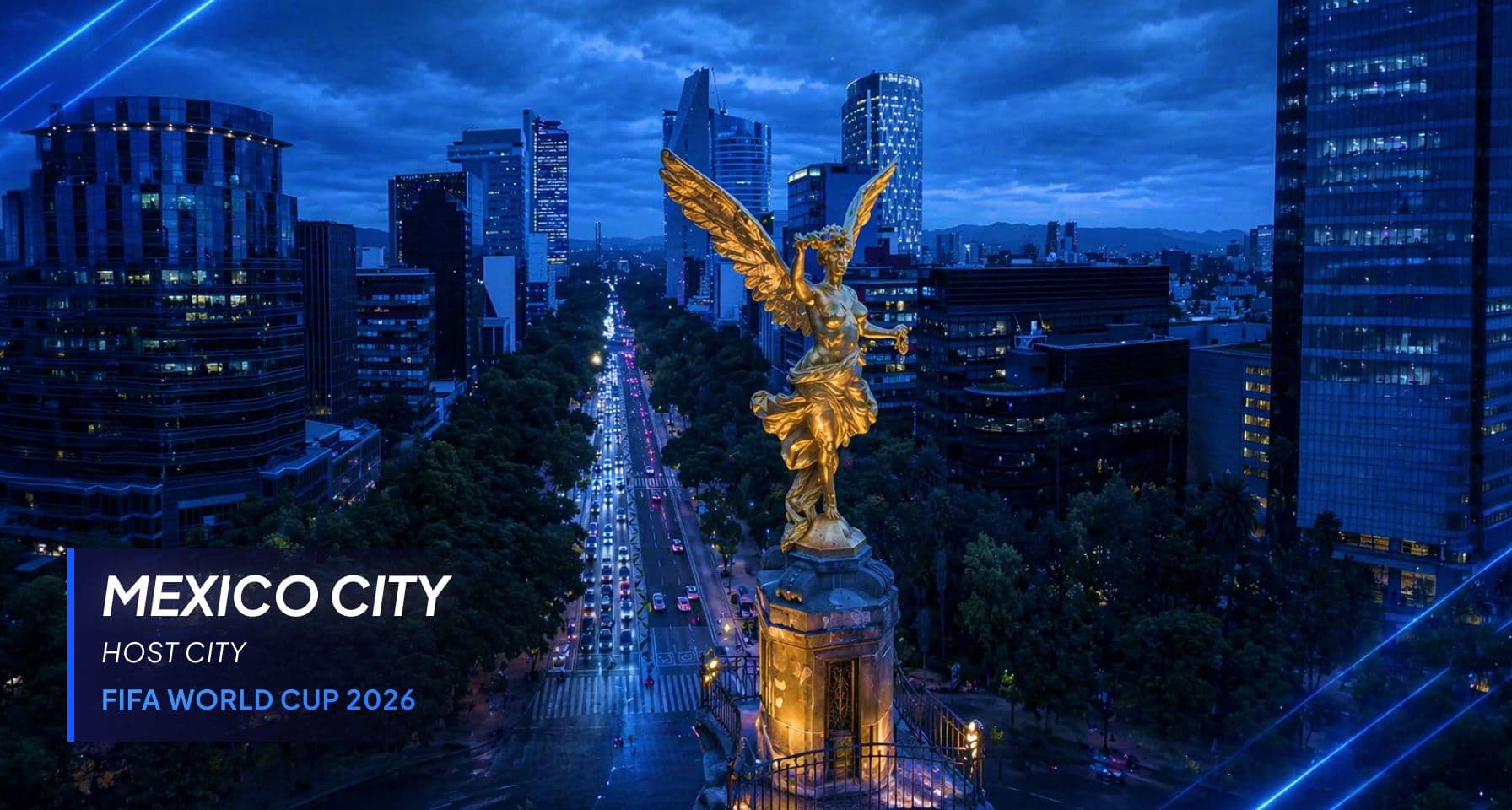
Mexico City: altitude thin air grind
Mexico City is the most dramatic host stop on the map. Estadio Azteca gives the city a huge football history, but the real story for visitors is the scale, altitude and relentless energy of the place itself.
Population & scale
- Mexico City metro population (2026): roughly 23 million, making it the largest city in the Western Hemisphere.
- The city‑proper population sits around 9.5 to 12 million, depending on the boundary definition.
Transit & access
- The Metro system is the main rail backbone, with multiple lines feeding match-day shuttle routes to the Azteca adjacent hubs.
- Mexico City International Airport (Aeropuerto Internacional Benito Juárez) handles the bulk of international and domestic hordes.
Vibe & food before the game
- Street taco al pastor joints, pulque bars, mural-lined plazas, and a thriving arts scene around the historic centre give the city a constant festival-on-legs feel.
- El Tizoncito stands, and hidden bar culture sits alongside the city centre tourist bites, so you can swap hotel buffet for a genuine “corner stall before kick‑off” run‑up.
Why fans will like it
Mexico City feels alive in a way that few host cities can match. It is busy, colourful and full of contrast, so fans who like big-city energy and a proper football culture will get a lot out of it. The altitude makes the trip feel different as well, which adds to the sense that this is not just another venue.
Quick fan facts
- Mexico City is the biggest city in the Western Hemisphere.
- Estadio Azteca sits at a very high altitude, which affects pace and stamina.
- The stadium area has strong street-food options for matchday eating.
Monterrey: steel city smoke and heat props
Monterrey has a tough, industrial feel that suits a World Cup host city well. It is modern, organised and backed by a mountain skyline that gives the whole place a stronger identity than a lot of flat, anonymous metro areas.
Population & scale
- Monterrey metro population (2026): roughly 5.0 to 5.3 million, the third‑largest metro in Mexico.
- The city proper sits around 1.1 to 1.2 million.
Transit & access
- The Metrorrey system covers the core, with feeder‑bus routes and taxis tying into the stadium‑access corridors.
- Monterrey International Airport (MTY) feeds domestic and regional‑hub routes.
Vibe & food before the game
- Cabrito BBQ joints, macro beer hall culture and cattle country meat markets dominate the pre‑match food run-up.
- The city’s “safest big city” reputation means you can walk more of the metro‑to‑stadium strip without the same crowd safety anxiety of Mexico City, though watch the bag game in the centre.
Why fans will like it
Monterrey feels built for fans who like a city with a bit of edge and identity. It is less polished than some venues, but that is part of the appeal, and the mountain backdrop makes it stand out straight away.
Quick fan facts
- Monterrey is the third-largest metro area in Mexico.
- The city proper is much smaller than the wider urban area.
- Cabrito is the dish most visitors should try at least once.
Quick Link: FIFA World Cup 2026 Host Cities
For a full breakdown of each venue, capacities, pitch details and stadium‑specific quirks, dip into our “Complete Guide to the 16 World Cup Stadiums”, which unpicks the 16 2026 World Cup host cities through the lens of the bowls themselves rather than the streets around them.
FAQ: 2026 World Cup Host Cities
New York/New Jersey at MetLife Stadium, July 19. Neutral vibe suits draws at evens.
USA 78, Mexico/Canada 13 each. US bulk means travel hubs like DFW.
Toronto; English vibes, TTC easy, poutine beats tacos. Expect tighter overs around even‑money‑type prices in chill‑tempo clashes.
UK fans: usually ESTA or visa for the USA, eTA for Canada, and often visa‑free tourism entry to Mexico (up to 180 days). Tickets are mainly via FIFA’s official channels and lottery phases.
Dallas and Atlanta hubs often feel like budget‑friendly entry points. Street food tacos and poutine snack plates are often achievable for under £10, but prices vary by spot.
For the 2026 World Cup, there will actually be three opening ceremonies, one in each host nation: the Estadio Azteca in Mexico City, SoFi Stadium in Los Angeles, and BC Place in Vancouver. The final and closing ceremony is scheduled for MetLife Stadium in New Jersey.