



2026 World Cup Stadiums Guide: 16 Venues, Capacities & Betting Edges

Author

Fact checker Daniela Stoeva
 14 Jul 2026
Alright, bab, 48 teams barrelling into 104 matches at 16 World Cup stadiums across the USA, Canada, and Mexico. Not your grandad’s World Cup; this lot’s a marathon, and these 16 stadiums? They’re the difference between a winning slip and chasing shadows. Azteca’s altitude gassing the lungs of Euros, Arrowhead’s roar drowning out the mids, AT&T’s roof locking unders around 5/6.
I’ve walked Brum grounds like St Andrew’s in the rain, felt that 360‑degree wall come charging at Powerhouse. Same vibe here; atmospheres ain’t fluff, they shift xG and shift lines. Back overs in domes around 10/11, home edges in Mexico near 4/6, or draws in polite Canadian spots pushing 12/5.UK punters will see this as 4/6 to 1/1 territory on the strong favourites, while US-style books will frame the same edge as moneylines around minus 150. We’ve got tables, breakdowns, no fluff. Let’s yam through ‘em, Blues‑style graft.
TL;DR Quick Ref
- 16 FIFA World Cup 2026 stadiums across three countries and 16 host cities, 104 matches in total.
- Opening match at high‑altitude Estadio Azteca, Mexico City, the third World Cup that the stadium will host.
- World Cup final at MetLife Stadium in East Rutherford, home of the New York Giants and New York Jets.
- AT&T Stadium near Dallas (FIFA: Dallas Stadium) is the largest venue at around 94,000 for the tournament.
- BMO Field in Toronto is the most intimate, expanded to roughly 45,000 for the World Cup.
- Domed or retractable-roof venues like AT&T Stadium (Dallas Stadium) and Mercedes‑Benz Stadium (Atlanta Stadium) offer controlled conditions that can clearly tilt totals markets.
Full details on all 16 FIFA World Cup 2026 stadiums, plus group‑stage and knockout‑stage matches, are below for fans planning trips and bets. Odds are examples only and can move on the day.
All 16 FIFA World Cup 2026 Stadiums (A to Z)
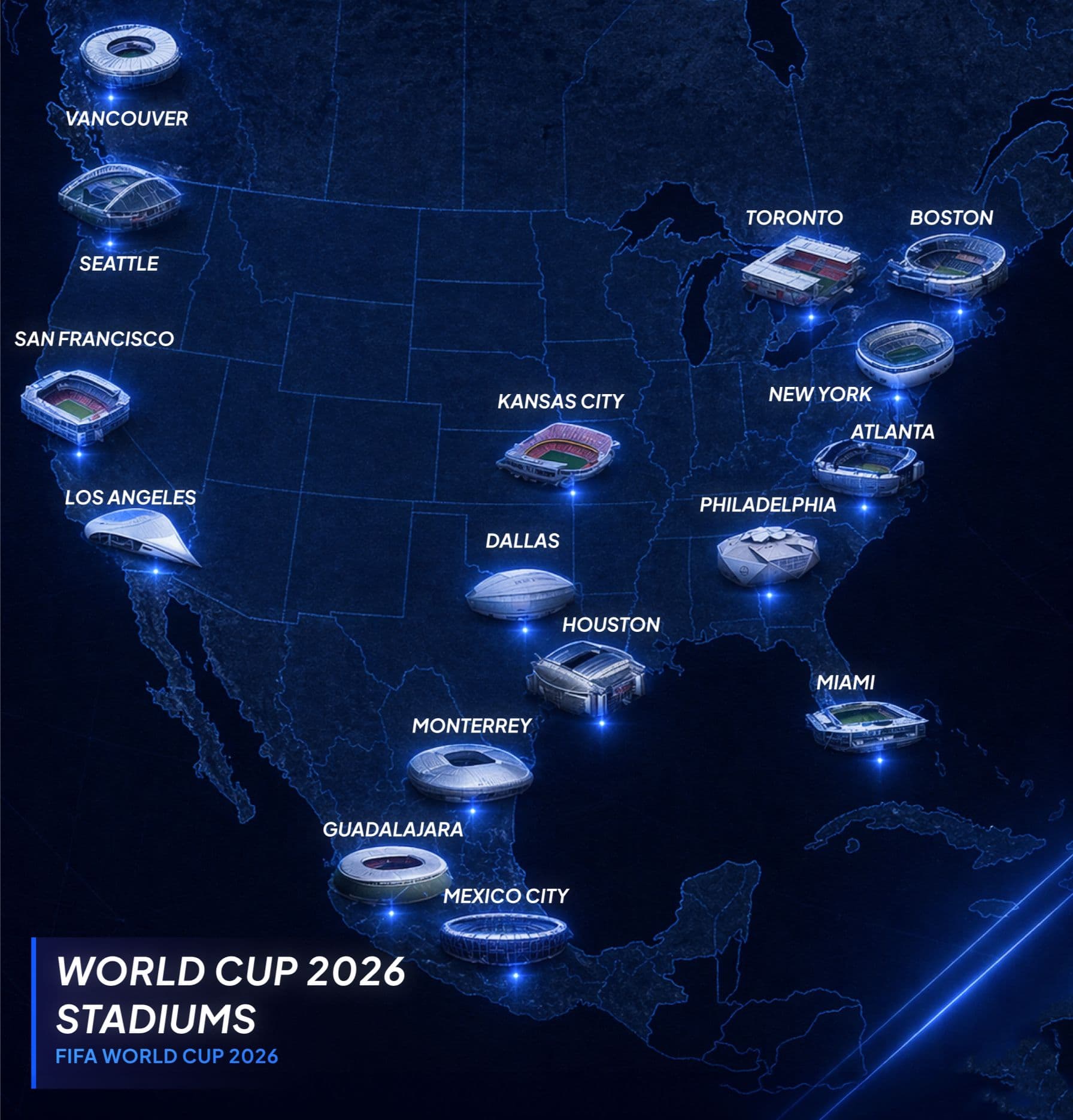
From AT&T’s Texas mega‑dome to Azteca’s high‑altitude history, the 16 venues are laid out in alphabetical order so you can jump straight to your favourite ground. Each breakdown includes capacity, map address, fun facts, transit, Harry’s take, and betting edges, with fixtures anchored to FIFA’s official 2026 schedule.
Note on stadium names
During the 2026 World Cup, FIFA bans most commercial sponsor names to protect official partners, so most venues drop their corporate tags. The everyday names you know are paired with FIFA’s tournament‑brand names in brackets, exactly as they’ll appear in the official match list.
Examples you’ll see later:
- SoFi Stadium to Los Angeles Stadium
- AT&T Stadium to Dallas Stadium
- Levi’s Stadium to San Francisco Bay Area Stadium
- MetLife to the New York, New Jersey Stadium
FIFA will rebrand the majority of the 16 venues this way, keeping the structures familiar but the labels neutral for the tournament. Wherever you see the bracketed FIFA name, that’s the one you’ll follow in the official fixtures and on‑screen graphics.
AT&T Stadium (Dallas Stadium): Arlington, USA
AT&T Stadium in Arlington is the big Texan beast of the 2026 FIFA World Cup, sitting between Dallas and Fort Worth and already famous as the home of the Dallas Cowboys. Designed by HKS Architects and opened in 2009, it is one of the largest covered stadiums in world football, hosting NFL, college games and major concerts. FIFA lists it among the core US venues set to host multiple World Cup 2026 matches, including key group‑stage and knockout ties.
The AT&T Stadium at a glance:
| Detail | Info |
|---|---|
Location | Arlington, Texas, USA |
Opened | 2009 |
Architect | HKS, Inc. |
Capacity (football) | Around 94,000 for the 2026 World Cup (FIFA‑listed figure) |
Roof | Retractable roof, climate-controlled |
Main teams | Dallas Cowboys (NFL) |
Major Events | Super Bowl XLV, College Football Playoff games, and major concerts |
FIFA World Cup role | One of the main US venues, set to host multiple group‑stage and knockout‑stage matches, including late‑round fixtures |
👆 Fun facts & fan features
- Record crowd of 101,763 for WrestleMania 32, with total events topping 105,000 when standing sections are used.
- Hosted the world’s highest‑attended basketball game, the 2010 NBA All‑Star Game, with 108,713 fans.
- Regularly pulls over 90,000 for Cowboys home games, plus blockbuster concerts from U2, Beyoncé and more.
- Giant centre‑hung video board runs almost the full length of the pitch, so you literally cannot escape the replay.
- Known locally as “Jerry’s World,” with a panoramic facade and the Cowboys’ AT logo dominating the skyline.
🚶 Getting to AT&T Stadium
AT&T Stadium sits in suburban Arlington, roughly midway between Dallas and Fort Worth, with fans usually coming in via interstate highways and the large parking lots around the complex. It is part of a wider entertainment zone that includes Globe Life Field and other venues, so matchdays feel like an all‑day festival more than a city‑centre stroll. The stadium is walkable from the adjacent entertainment campus, with shuttle services and event‑day parking upgrades for World Cup‑scale crowds.
- Address (for maps): One AT&T Way, Arlington, TX 76011
💰 How it plays for bettors
With a retractable roof and climate‑controlled conditions, AT&T behaves like a neutral, high‑quality pitch where tactical shape and game management often beat weather chaos. That can tilt totals markets towards the tighter side in big games, making unders around 5/6 or draw‑no‑bet lines an attractive hedge in cagey knockout ties compared with the more extreme conditions in high‑altitude or open‑air venues.
Games here also tend to favour the stronger side on the handicap, with fewer big‑score swings than you often see in exposed, windy bowls. If you’re eyeing a tight match‑winner market, this is where the slight edge can sit with the team that travels better and copes mentally with the Texan spectacle.

If you’re backing a side to handle the stage, this is your test. If a player bottles it with 100,000 Texans watching, bab, you probably shouldn’t trust them in a World Cup semi either. AT&T’s the kind of stage that tells the truth about your team’s nerve as much as anything else.
BC Place: Vancouver, Canada
BC Place in Vancouver is Canada’s main World Cup stage, a familiar sight from the 2010 Winter Olympics and the 2015 Women’s World Cup final. Opened in 1983 and heavily renovated between 2009 and 2011, it switched from an air‑supported dome to a cable‑supported retractable roof, giving it a modern, bright look. The stadium will host seven 2026 World Cup matches, including five group‑stage fixtures, a Round of 32 game and a Round of 16 tie, making it the busiest of Canada’s two host venues.
Stadium facts:
| Detail | info |
|---|---|
Location | Vancouver, British Columbia, Canada |
Opened | 1983, major renovation from 2009 to 2011 |
Architect | Studio Phillips Barratt (original); Stantec and others for roof renovation |
Capacity (football) | Around 54,500 for the 2026 World Cup |
Roof | Retractable fabric roof with cable support |
main teams | BC Lions (CFL), Vancouver Whitecaps FC (MLS) |
Past major events | 2010 Winter Olympics ceremonies, 2015 Women’s World Cup final, major concerts and MLS finals |
2026 World Cup role | Hosts five group‑stage matches, one Round of 32 and one Round of 16 game, including at least two Canada fixtures |
🤘 Fun facts & fan features
- The 2010 Olympic torch still burns outside the main entrance, a permanent nod to the Winter Games.
- Poutine and gravy‑heavy food zones are everywhere, turning the concourses into a proper snack war.
- Vancouver Whitecaps supporters create a Euro‑style wall of sound, flags and smoke when the stakes are up.
- The roof rumbles when the home team scores, and the Pacific‑Northwest skyline frames the whole show from the upper deck.
- False‑Creek‑side bars and restaurants roll into fan‑festival mode on matchdays, so the whole night out wraps around the stadium.
🚄 Getting to BC Place: 777 Pacific Boulevard, Vancouver, BC V6B 4Y8, Canada
BC Place is walkable from downtown Vancouver, with SkyTrain stops including Stadium - Chinatown and Waterfront close by, plus bus routes feeding into the False Creek area. Fans arriving from the airport or hotels can use SkyTrain, local buses or short taxi/rideshare hops to the stadium entrance. The concourses also link directly to the Vancouver Convention Centre and the adjacent waterfront, making it an easy hub for travelling fans who want to mix the match with city‑centre sights.
💰 How it plays for bettors
With a retractable roof and the mild Pacific‑Northwest climate, BC Place offers consistent playing conditions that suit technically strong sides and controlled, patient football. That can encourage more draws and slightly lower totals when evenly matched teams meet, making draw‑no‑bet lines and under‑3.5‑goals markets look attractive, especially if the odds are shading around evens.
Canada’s national‑team fixtures here will feel like a 12th‑man‑style home‑blessing, so you can expect home‑win prices to be nudged shorter than raw form would suggest, with the compact, covered bowl keeping the noise focused and the pressure high.
Polite‑Canada crowds don’t shout as loud as the Americans, but they’ll bloody well hang around and watch you choke. Draw‑no‑bet around evens or 12/5 when nobody wants to lose, and always respect the Canucks’ odds when they walk out under that retractable roof.
BMO Field (Toronto Stadium): Toronto, Canada
BMO Field at Exhibition Place in Toronto will be Canada’s second World Cup venue and a heavily upgraded stadium by the time 2026 kicks off. Opened in 2007 on the site of the old Exhibition Stadium, it is home to Toronto FC and the Toronto Argonauts, and for the 2026 World Cup, it will operate under the FIFA‑neutral name Toronto Stadium. The ground is set to host six matches, including Canada’s historic men’s World Cup opener on 12 June 2026.
Stadium quick scan:
| Detail | Info |
|---|---|
Location | Exhibition Place, Toronto, Ontario, Canada |
Opened | 2007 |
Architect | Brisbin Brook Beynon Architects (original MLS‑field brief; later upgrades by MLSE‑led team) |
Capacity (football) | Around 31,000 for regular matches, expanded to 45,000 for the 2026 World Cup via 17,000 temporary seats |
Roof | Mostly open, partial canopies over some stands |
Main teams | Toronto FC (MLS), Toronto Argonauts (CFL) |
Major events | MLS Cup occasions, Canada national team fixtures, summer concerts and exhibition‑space events |
2026 World Cup role | Hosts five group‑stage matches and one Round of 32 knockout game; the smallest venue in the 16‑stadium line‑up, but the one where Canada’s first‑ever men’s World Cup home game will be played |
👆 Fun facts & fan features
The Toronto FC “Red Patch Boys” occupy the north‑end stand and are widely regarded as one of MLS’s loudest, oldest supporters groups.
The lakeside layout at Exhibition Place turns the perimeter into a fan‑festival strip, with bars, food trucks and live music on big matchdays.
The 2026 renovations add four new LED corner boards, upgraded concourses and thousands of temporary seats, but the pitch remains tight and compact, keeping the noise close to the action.
Craft beer and poutine‑heavy combos hit differently lakeside, especially when Canada’s kits are flooding the stands on World Cup nights.
After the tournament, most of the temporary seating will be stripped out, leaving a long‑term upgrade for Toronto FC but reverting the bowl to a more intimate, club‑style feel.
🚃 Getting to BMO Field
BMO Field is well connected to downtown Toronto via GO Transit trains to Exhibition Station, TTC streetcar routes (511 Bathurst, 509 Harbourfront) and short taxi or rideshare hops from the waterfront and core. On matchdays, the surrounding Exhibition Place site fills with fan zones, food stalls and roaming DJ sets, giving it a proper festival‑style build‑up. The direct route from Union Station via the 509 or 511 streetcars is usually the least hassle for travelling fans, with the 170 Princes Boulevard address lining up neatly with the stadium’s main entrance.
- Full address for your Google Maps: 170 Princes Boulevard, Toronto, ON M6K 3C3
💰 How it plays for bettors
As a compact, open‑air bowl, noise and crowd pressure stack high in the stands, which can give Canada and other seeded sides a noticeable lift on big nights. Conditions are otherwise straightforward, no roof, no altitude, so this leans towards balanced, technical football markets: both‑teams‑to‑score around evens in open‑group games and home‑win prices nipped shorter for the Canadians, similar to how MLS‑style home‑form odds behave in the regular season.
The tight sightlines also mean fans can keep their eyes on the game rather than squirrel‑hunting for the perfect pint, which can help keep in‑running markets a touch more predictable than the big‑dome‑style venues.
Tight TFC bowl, Red Patch Boys noise, and the whole Exhibition Place site turning into a World Cup beer‑garden… this is the kind of compact, intimate stadium where a 1‑0 lets you squeak out of the bar early. Both‑teams‑to‑score around evens when the away end is under‑packed, and the Canadians are on the charge.
Estadio Akron (Guadalajara Stadium): Guadalajara, México
Estadio Akron, just outside Guadalajara, is a futuristic bowl that will show off Mexican club culture to the 2026 World Cup crowd. Opened in 2010 as the home of C.D. Guadalajara (Chivas), it has already hosted a Copa Libertadores final leg, the 2011 Pan American Games ceremonies, and FIFA youth World Cup matches. For the 2026 World Cup, it will operate under the FIFA‑neutral name Estadio Guadalajara (Guadalajara Stadium) and is set to host four group‑stage fixtures, including Mexico’s high‑profile second matchday clash against Poland.
Stadium at a glance:
| Detail | Info |
|---|---|
Location | Zapopan, Guadalajara metropolitan area, Mexico |
Opened | 2010 |
Architect | Studio Massaud‑linked design team with Mexican partners (reported in design coverage |
Capacity (football) | Around 48,071 for the 2026 World Cup, making it the second‑smallest venue in the 16‑stadium line‑up and the smallest in Mexico |
Roof | Distinctive partial roof with grassy outer mound, open pitch |
Main team | C.D. Guadalajara (Chivas) |
Major events | 2010 Copa Libertadores final leg, 2011 Pan American Games ceremonies, 2011 FIFA U‑17 World Cup matches, Liga MX finals |
2026 World Cup role | Hosts four group‑stage matches, all in the group phase,no knockout games scheduled here |
👆 Fun facts & fan features:
- The grassy‑mound roof looks like an alien spaceship landed on the Zapopan rim, with the stadium’s “Volcán Verde” berm soaking up the hillside.
- Chivas fans dress entire families in red and white, turning the bowl into a single‑tone sea of support for the home‑grown model.
- The upper tier’s “Cópula Skull” bar and restaurant area gives views straight down the pitch while you knock back local tequila or mezcal‑inspired cocktails.
- The 48,071‑seat configuration keeps the noise close and the sightlines tight, so even the back‑of‑the‑net angles feel like front‑row seats.
- The surrounding area rolls out street‑food stalls, fan‑fest areas and local bars, especially for the 18 June Mexico vs South Korea showdown, which is the stadium’s marquee World Cup fixture.
🚌 Getting there: Av. Circuito JVC 2800, El Bajío, 45190 Zapopan, Jalisco
The stadium forms part of a wider complex on the edge of the city, linked by main arterial roads and bus routes from central Guadalajara and nearby suburbs. On World Cup‑scale matchdays, the area around the stadium turns into a fan‑zone strip with food, music and branded merchandise, giving it a proper festival vibe. Most visitors will come via the Guadalajara Macrobús rapid‑transit system, local buses into Zapopan, or short taxi/rideshare rides from the city centre, with the Av. Circuito JVC 2800 address lining straight up with the main entrance.
💰 How it plays for bettors
Guadalajara’s support is intense and partisan, and while the 2026 fixtures are technically neutral, that same design keeps sound in the bowl and ramps up pressure on visiting sides. The pitch is modern, the altitude is only modest (around 450m), and the roof is only partial, so the main atmospheric edge comes from the crowd rather than thin air. That can make this a solid overs 2.5 candidate in lively group‑stage ties, especially when two attack‑minded sides meet, and the odds are around evens.
The Mexico vs South Korea slot in Group A lends itself to tighter, nervy‑match‑winner pricing, but the compact bowl and electric crowd can favour a slight edge on the Chivas‑style “home‑blessing” even if the visitors are technically stronger on paper.
Chivas passion pit, modest heat edge but not altitude, and a bowl that’s not quite open but still loud enough to eat the visitors alive. Overs 2.5 around evens when Guadalajara turns it into a festa and the stadium feels like one big red and white echo‑chamber.
Estadio Azteca (Mexico City Stadium): Mexico City, Mexico
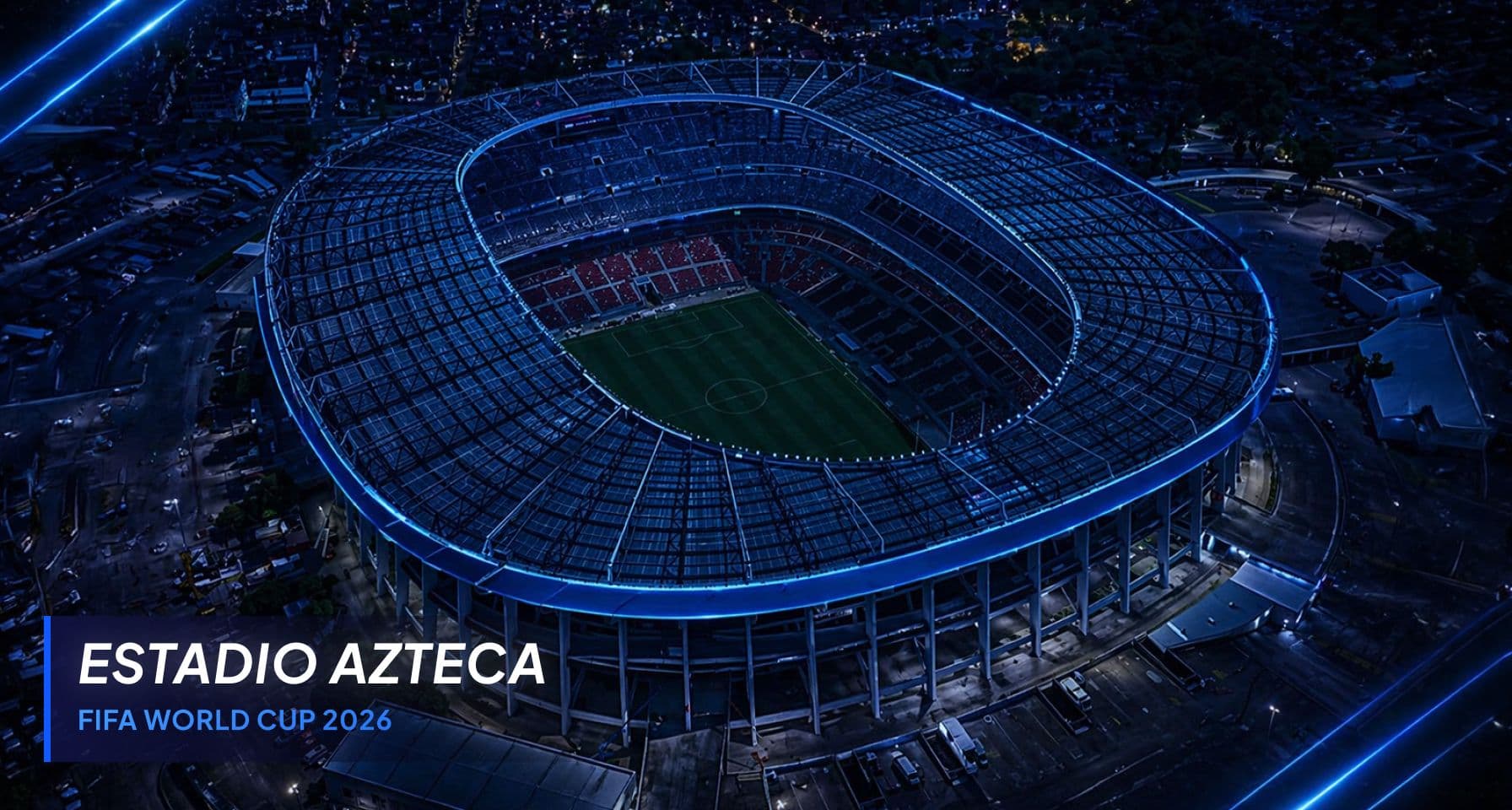
Estadio Azteca in Mexico City is pure World Cup church, becoming the first stadium to host at least three World Cups when 2026 rolls in. Opened in 1966 and modernised several times since, this open‑bowl beast sits at roughly 2,250 metres above sea level, giving it a physical edge over visitors who haven’t acclimatised. The 2026 tournament schedule slots six matches here, including the opening game and the first‑round rematch between Mexico and South Africa, plus three more group‑stage ties, with no knockout fixtures at Azteca once the round‑of‑32 grid begins.
Quick stadium info:
| Detail | Info |
|---|---|
Location | Mexico City, Mexico |
Opened | 1966 |
Architect | Pedro Ramírez Vázquez, Rafael Mijares Alcérreca |
Capacity (football) | Around 83,222 after recent upgrades, making it the largest stadium in Mexico and one of the most atmospheric bowls in the 16‑venue line‑up |
Roof | Open bowl, with the famous circular tiers stacked tightly around the pitch |
Main teams | Club América, Mexico national team |
Major events | 1970 and 1986 World Cup finals, 1968 Summer Olympics football competitions, and countless El Clásico games for Club América and their rivals |
FIFA World Cup | Hosts six matches: opening game plus five group‑stage fixtures, with the last‑day‑group‑stage Mexico vs South Africa tie headlining the stadium’s schedule |
👆 Fun facts & fan features
- Azteca holds football‑only record crowds over 119,000 for the 1968 Mexico vs Brazil friendly, with boxing events packing in more than 132,000 for Julio César Chávez vs Greg Haugen.
- The stadium became a World Cup icon with memorable matches such as Pelé’s 1970 final and Maradona’s “Hand of God” plus the “Goal of the Century” in the same 1986 quarter‑final at the same venue.
- The bowl is stacked with more than 850 executive suites layered around the upper tiers, so the noise hits the pitch from almost every vertical angle.
- The murals and history‑boards around the concourses turn the walk‑to‑your‑seat into a mini‑museum‑crawl, which visiting fans can either ignore or quietly resent as extra pressure.
- Kick‑off lighting floods the bowl orange at night, and the elevated altitude means the warm‑up run‑in from the stands to the pitch feels like a proper lung test for new arrivals.
🚇 Getting to Estadio Azteca
Azteca lies in the south of Mexico City, with the stadium itself framed by the Calzada de Tlalpan and the Colonia Ciudad de los Deportes district. Local fans usually use the Metro Line 2 stop Estadio Azteca and the adjacent light‑rail and bus routes, while visitors from the airport and central hotels can hop on the Metrobus or use short taxi/rideshare rides aimed at the Calzada de Tlalpan 3465 address. The area is well‑practised at moving huge crowds after decades of Mexico‑national‑team and Club‑América games, so the big‑match‑day flows are usually smooth, if not exactly quiet.
- Exact location address: Calzada de Tlalpan 3465, 04650 Mexico City, Mexico.
💰 How it plays for bettors
The high‑altitude Mexico City squeeze is brutal on teams not used to thin air, especially in the second half when pressing fades and legs go. That can favour Mexico and other acclimatised Latin‑American sides in the 1X2 market, with home‑win prices nudging shorter than pure form would suggest when the visitor has just arrived in the city. The same thin‑air pressure also tends to open late‑game defences, which can tilt overs‑2.5 lines around evens late in group‑stage ties, especially when the underdog finds a second‑half wind‑and‑fatigue‑driven opening.
For in‑running markets, the stadium’s 90‑minute life‑cycle often leans towards late‑game goal‑peaks, so chasing a value‑back in the 60 to 90 minute window can pay off more than sitting on a tight first‑half unders.
This isn’t just a stadium, it’s football’s church. If your lads go a goal down here and sulk, cash out quick, bab; this place smells fear as well as history. High‑altitude, 80k lungs, and the kind of weight‑of‑expectation that turns group‑stage games into semi‑final nerves.
Estadio BBVA: Guadalupe, Monterrey, México
Estadio BBVA, nicknamed “El Gigante de Acero” (the steel giant), is Monterrey’s modern World Cup stage, with sweeping views of the surrounding mountains and the Sierra Madre flanking the bowl. Inaugurated in 2015 as the new home of C.F. Monterrey, it replaced the old Estadio Tecnológico and set a new standard for Mexican club‑stadium build quality and sightlines. For the 2026 World Cup, it will carry the FIFA‑neutral name Estadio Monterrey (Monterrey Stadium) and is set to host four matches, three group‑stage fixtures and one Round of 32 knockout tie, giving it a compact but high‑intensity World Cup programme.
Stadium at a glance:
| Detail | Info |
|---|---|
Location | Guadalupe, Greater Monterrey, Nuevo León, México |
Opened | 2015 |
Architect | Populous and local Mexican partners (VFO‑linked firms) |
Capacity (football) | Around 53,500 for the 2026 World Cup, making it the third‑smallest venue in the 16‑stadium line‑up and the second‑smallest in Mexico |
Roof | Partially covered stands, open‑pitch layout with a protective canopy over the bowl rather than a full dome |
Main team | C.F. Monterrey (Rayados) |
Major events | Liga MX finals, continental‑style showcases, high‑profile concerts and the stadium’s debut Eusébio Cup against Benfica in 2015 |
2026 World cup role | Hosts three group‑stage games and one Round of 32 knockout match; the stadium is a prime northern‑Mexico showcase, but with a smaller total‑match count than the larger US‑side domes |
👆 Fun facts & fan features
- “El Gigante de Acero” glows blue at night, with the steel frame and floodlights turning the bowl into a glowing blue‑tinted bowl from the highway, especially when the mountains are back‑lit.
- Monterrey barbecue and carne‑asada culture dominate the stadium‑side grills, with local tacos and charred‑meat plates turning the concourses into a proper Tex‑Mex feast zone.
- Rayados ultras bring coordinated pyro, big drums and the national‑anthem‑style chants, and the committed‑fan sections stay full right through the second half, which keeps the noise‑wall looming.
- The steel frame and upper‑deck structure can actually vibrate when the full crowd jumps on a late‑game goal, which makes the “feel” of the place more pressing than the raw capacity figure suggests.
- The surrounding area in Guadalupe rolls out street‑food stalls and beer gardens on big matchdays, with fans spilling into the nearby squares and parks until the stadium lights come up for the walk to your seat.
🛣️ Getting to Estadio BBVA
The stadium sits in Guadalupe in the Monterrey metropolitan area, accessible by the main roads linking into the city (Av. Pablo Livas and the surrounding connector routes) and local public transport routes serving the Guadalupe neighbourhood. Metrorrey Line 1 stops such as Sendero and Penitenciaría are within walking distance, with onward walking or short taxi/rideshare rides to the stadium gates. The stadium is designed as a modern, self‑contained complex with on‑site parking and hospitality around the ground, making it a full evening out for fans rather than a quick‑hop‑in‑hop‑out stop.
- The full address Av. Pablo Livas s/n, La Pastora, 67170 Guadalupe, N.L., The main entrance turnstiles and the primary fan‑zone plaza.
💰 How it plays for bettors
BBVA’s steep stands and partially covered, open‑pitch design create a tight, noisy feel that can lean towards home‑comfort atmospheres even when the fixtures are technically neutral. The 53,500‑seat bowl is compact enough that the sound finds the pitch easily, which can push the slight edge towards Mexico and other Latin‑American sides on the 1X2 when the visitors are on the back foot, especially in the second half when the stadium momentum builds.
The open‑pitch and manageable altitude (no big‑altitude boost like Mexico City) mean the main edge is atmospheric rather than physiological, so this is a solid both‑teams‑to‑score angle when visiting attacks keep their nerve and the scores are already moving, with BTTS lines looking live around evens in the group‑stage ties. The Round of 32 fixture here also tends to favour cautious, lower‑scoring handicaps than the later‑round games in the big‑bowl US venues, so unders thinking is worth a look if the market is pricing the total too aggressively.
Steel‑cage roar, Monterrey barbecue smoke and the whole ‘El Gigante de Acero’ glow‑in‑the‑dark thing make this a compact, pressurised bowl that doesn’t forgive slack defenders. Home‑win edges around 4/6 feel fair when the visitors are facing the full‑on Rayados noise, and both‑teams‑to‑score at evens when the passing stays tight and the late‑game nerves start to show.
GEHA Field at Arrowhead (Kansas City Stadium): Kansas City, USA
GEHA Field at Arrowhead Stadium is one of the loudest venues in the world of sport, holding the Guinness World Record for crowd noise during a Kansas City Chiefs game. Open since 1972, it is the oldest AFC stadium still in use and part of the Truman Sports Complex with neighbouring Kauffman Stadium. For the 2026 World Cup, it will carry the FIFA-neutral name Kansas City Stadium and is set to host six matches: four group‑stage fixtures, one Round of 32 tie, and one quarter‑final, making it the only US‑side venue to crack the latter‑stage bracket outside the main headline bowls.
Stadium quick scan:
| Detail | Info |
|---|---|
Location | Kansas City, Missouri, USA |
Opened | 1972 |
Architect | Kivett and Myers, with later modernisation work by the Chiefs’ design and engineering partners |
Capacity (football) | Around 73,000 to 76,416, depending on configuration, used at roughly 73,000 for the 2026 World Cup, making it the fifth‑largest of the 16 venues |
Roof | Open‑air bowl, no roof |
Main team | Kansas City Chiefs (NFL) |
Major events | NFL playoffs, record‑breaking noise games, international friendlies, concerts |
2026 World Cup role | Hosts four group‑stage matches, one Round of 32 knockout game and one quarter‑final, with the 11 July quarter‑final being the showpiece fixture here |
👆 Fun facts & fan features
- Holds the Guinness World Record for loudest crowd at 142.2 dB during a Chiefs game, meaning the place is genuinely deafening at peak volume.
- Chiefs Kingdom tailgates start 12+ hours early, turning the Truman Sports Complex into a full‑day festival of parked cars, grills, flags and team chants.
- Kansas City barbecue is the main game in the concourses, with the Gates vs Joe ’ s-style burnt‑ends feud and local smoke‑house pop‑ups turning the walk‑to‑your‑seat into a calorie‑crime scene.
- The 142‑dB roar and steep stands can make the visiting bench look like it’s sitting at the bottom of a sound canyon, while the red‑sea effect of 70,000 fans in Chiefs garb is genuinely intimidating.
- The surrounding area rolls out extra beer zones and fan‑fest strips on big World Cup day, with the stadium complex vibe feeling more like a state fair-style carnival than a tight city-centre bowl.
🛣️ Getting to Arrowhead Stadium
Arrowhead sits east of downtown in the Truman Sports Complex, accessible largely via interstate highways (I‑70, US‑71) and the large parking lots around the ground, with shuttle and bus options on major event days. The stadium is built for a tailgating culture, so expect long pre‑match build‑ups, packed parking lots and queues around the main entrances.
The official address, 1 Arrowhead Drive, Kansas City, MO 64129, will take you up with the main gate closest to the fan‑zone plaza and the primary ticket‑checkpoints.
💰 How it plays for bettors
The stadium’s design traps sound and amplifies the Chiefs‑style 142‑dB roar, making it intimidating even for seasoned visitors, and the wind can swirl across the open field depending on the pitch orientation. That cocktail can favour emotionally charged, high‑intensity games, where home‑continent teams and underdogs with strong support can outperform their prices.
This can also nudge both‑teams‑to‑score and card markets above model expectations, especially in knockout-stage ties, with BTTS and overs‑type pitches looking live as the scores move. The quarter‑final here is likely to feature a top‑seeded nation, but the open‑air bowl and crowd pressure can level things up enough to keep the markets on the watch list for in‑running, late-game goals and nervous defence overs.
142 dB turns refs deaf and mids dizzy. Back home overs around 6/5 and both‑teams‑to‑score at 4/5 when the Chiefs‑Kingdom‑style noise turns the pitch into a proper gladiator‑pit. If the visitors are on the back foot, Kansas City doesn’t just win games, it eats tourists alive.
Gillette Stadium (Boston Stadium): Foxborough, USA
Gillette Stadium in Foxborough brings New England into the 2026 World Cup, sitting midway between Boston and Providence and already famous as the home of the New England Patriots and New England Revolution. Opened in 2002 as a replacement for the old Foxboro Stadium, it is now the Patriots’ dynasty fortress and the shared home of the Major League Soccer side Revolution.
For the 2026 World Cup, it will operate under the FIFA‑neutral name Boston Stadium and is set to host seven matches. Five group‑stage fixtures, one Round of 32 knockout game and one quarter‑final. Thus, making it the New England hub for both the early‑stage spectacle and the big round of knockout drama.
Stadium info at a glance:
| Detail | Info |
|---|---|
Location | Foxborough, Massachusetts, USA |
Opened | 2002 |
Architect | HOK Sport (now Populous) with the Patriots’ engineering and design partners |
Capacity (football) | Around 65,878 for the 2026 World Cup, making it the joint‑smallest of the 11 US‑side venues and the 11th‑largest of the 16 overal |
Roof | Open‑air, no roof, though the Patriots’ recent renovation added a large‑scale canopy and the 22‑story‑style lighthouse and bridge structure that looms over the north end |
Main teams | New England Patriots (NFL), New England Revolution (MLS) |
Major events | Super Bowl parades, high‑profile international friendlies, concerts and the 2002 - 03 Patriots’ dynastic run |
FIFA World Cup role | Hosts five group‑stage matches, one Round of 32 tie and one quarter‑final, with the 9 July quarter‑final being the showpiece fixture at the stadium |
👆 Fun facts & fan features
- The Patriot Place retail and dining complex wraps around the stadium, so you can eat a lobster roll, wander through the Patriots Hall of Fame and then stumble into your seat without once touching proper city traffic.
- Recent renovations have poured around $225 to 250 million into the stadium, adding a huge lighthouse tower, panoramic observation decks and the largest curved‑radius video board in the US by the time the World Cup starts.
- The Patriots’ dynasty‑era banner‑wall and the surrounding “Gameday Village” area turn the concourses into a proper theme park build‑up, especially when the American pre‑match bands and cheerleaders roll out before big‑round‑of‑knockout evenings.
- New England chowder‑heavy stands plus craft‑beer‑heavy stands keep the walk‑around interesting, and the commuter‑rail‑plus‑shuttle vibe from Boston and Providence means you can arrive without a parking‑car‑parking‑war if you’re happy to ride the trains.
- The open‑air bowl and the 22‑story lighthouse give the stadium a strangely “elevated” feel at night, as if the floodlights are turning the whole complex into a glowing island in the Foxborough suburbs.
🚈 Getting to the Gillette Stadium
Gillette sits at Patriot Place, with special‑event commuter rail services from Boston and Providence feeding directly into the stadium area, plus extensive on‑site parking and park‑and‑ride routes from Interstate 95, Route 1 and the wider New England road network. The stadium is built around car traffic and event‑day trains, so expect queues around the main gates and the Patriot Place plaza when the group‑stage crowds and the quarter‑final night rush hit.
📍 The address 1 Patriot Place, Foxborough, MA 02035, leads you to the primary entrance closest to the fan zone and the main ticket checkpoints.
💰 How it plays for bettors
New England weather can be cool or damp even in summer evenings, and Gillette’s open‑air design exposes the pitch to cross winds and the occasional chilly undercurrent, especially at the later kick-off times tucked into the quarter‑final slot. That can nudge totals down a touch, making unders around 5/6 more attractive than the pure talent lines would suggest when two tight‑defensive sides meet.
Technical sides may need a few minutes to adjust to the breeze, and the slightly uneven pitch‑surface feel after the switch from club grounds, which can open up the odds over in running window late in open pace games. The quarter‑final here also tends to lean towards a tighter than average first‑half, with the goals often pushed into the 60 to 90 minute window, so late in‑play overs and both‑teams‑to‑score at evens are worth a look if the market is still framing the scoreline as a 0‑0 draw preference.
New England wind kills long balls, and the pitch feels like it’s got a bit of a tilt on the second half; unders sitting around 5/6 when the climate and the crowd size don’t quite match up. Back the under‑3.5’s when two tight defensive sides turn Gillette into a proper graft fest, and then go back‑to‑overs in the 70th when the tempers start to show, and the Pats style banner wall starts to feel a bit heavy on the defenders’ shoulders.
Hard Rock Stadium (Miami Stadium): Miami Gardens, USA
Hard Rock Stadium in Miami Gardens brings South Florida sunshine and nightlife to the 2026 World Cup. Opened in 1987 as Joe Robbie Stadium and renovated repeatedly since, it has hosted multiple Super Bowls, college championships and major concerts. It is now the home of the Miami Dolphins and the Miami Grand Prix F1 race.
For the 2026 World Cup, it will carry the FIFA-neutral name Miami Stadium and is set to host six matches: four group‑stage fixtures, one Round of 32 game, and one quarter‑final, making it the Caribbean corner showpiece of the tournament.
Stadium quick scan:
| Detail | Info |
|---|---|
Location | Miami Gardens, Florida, USA |
Opened | 1987 |
Architect | Populous (HOK Sport), with later redevelopment work |
Capacity (football) | Around 64,000 for the 2026 World Cup, making it the 10th‑largest of the 16 venues |
Roof | Open‑air field with a canopy over the stands, not a full‑roof |
Main teams | Miami Dolphins (NFL), University of Miami Hurricanes (NCAA) |
Major events | Multiple Super Bowls, Orange Bowl, Miami Grand Prix F1, and high-profile concerts |
2026 FIFA role | Hosts four group‑stage matches, one Round of 32 tie and one quarter‑final, with the 7 July quarter‑final the showpiece fixture here |
🤘 Fun facts & fan features
- The Hard Rock stadium is known for its South Beach energy, with bold colours, flashy branding and a party vibe that feels more like a festival than a strict club match day.
- Recent renovations have added a large video board, an 11,000-seat canopy and upgraded concourses, while keeping the pitch open to the heat and the sun.
- The menu now features Cuban sandwiches, lobster rolls, South Florida seafood and rotating Latin‑inspired stands; some options are good value, others pure tourist‑tax.
- Local food creators and YouTubers regularly review the stadium stands, with videos that dive into chicharrón, choripán, and other Latin staple dishes.
- The F1 Miami GP runs next door, so the parking lots and the car park lanes often feel like a revolving door showpiece for supercars and motorsport flags.
🛣️ Getting to Hard Rock Stadium
The stadium sits north of downtown Miami in Miami Gardens, reached mainly via expressways (I‑95, Florida’s Turnpike) and park-and-ride services, with shuttle connections from tourist areas and hotel districts. The big car parks and the event‑style setup are designed for NFL crowds, so expect queues around the main entrances and the fan zone plaza on big match days.
📍 The address 347 Don Shula Drive, Miami Gardens, FL 33056, is the primary entrance for the match‑day fan‑zone and the main ticket‑checkpoints.
💰 How it plays for bettors
Heat and humidity in South Florida are no joke, even with the partial canopy shading the stands. Expect tempo to drop in the second half, especially in afternoon group‑stage fixtures, which can make late in‑play unders appealing around 5/6 on the over‑2.5 lines when tired legs and cramp fatigue start to show.
The open‑air pitch also favours low‑scoring, tight defensive affairs when the conditions are at their worst, so match‑winner lines tend to lean towards the stronger side on the handicap, with the slight edge on the physical side rather than the technical. The quarter‑final here can feel like a proper attrition test more than a free‑flowing attacking show, which keeps both teams to score at evens, and an interesting angle when the visitors are ready to hit on the break.
Hard Rock is the one where you could blow your betting pot on the food stalls before you see a ball kicked. The heat and the humidity can turn the pitch into a slow‑motion grind, so back the unders around 5/6 when the climate’s at its worst and the crowd’s more interested in the lobster roll than the xG graphic. If the visitors are ready to hit the hosts on the break, that’s when the value usually hides in the second‑half over windows.
Levi's Stadium ( San Francisco Bay Area Stadium): Santa Clara, USA
Levi’s Stadium in Santa Clara brings the 2026 World Cup to the heart of the San Francisco Bay Area. Completed in 2014, it is the home of the San Francisco 49ers and has already hosted Super Bowl 50 and high‑profile CONCACAF Gold Cup matches. For the tournament, it will carry the FIFA‑neutral name San Francisco Bay Area Stadium and is set to host six matches: four group‑stage fixtures, one Round of 32 game and one quarter‑final, making it the West Coast tech‑hub venue for the showpieces of the final stages.
Stadium at a glance:
| Detail | Info |
|---|---|
Location | Santa Clara, California, USA |
Opened | 2014 |
Architect | HNTB and local partners (project reports) |
Capacity (football) | Around 68,500, expandable to 75,000 for big‑ticket occasions, making it the 7th‑largest of the 16 venue |
Roof | Open‑air with sun‑shades over parts of the stands, not a full roof |
Main teams | San Francisco 49ers (NFL), selected San Jose Earthquakes matches |
Major events | Super Bowl 50, CONCACAF Gold Cup finals, high‑profile concerts |
2026 World Cup role | Hosts four group‑stage matches, one Round of 32 tie and one quarter‑final, with the 10 July quarter‑final the showpiece fixture here |
👆 Fun facts & fan features
- The stadium is wired for Silicon Valley gadgetry, with Apple Watch payments, app‑linked ticket gates, and big-screen stat feeds that feel more like a tech demo than a classic English ground.
- The Bay Area food scene takes over the concourses, with sushi, tacos, Mexican plates and craft beer galore, giving the walk to your seat a proper “food‑festival” vibe.
- The 49ers faithful know how to do the “wave” better than most, and the bowl‑style layout makes the whole thing feel like a rolling sea of red when the chant sections get going.
- The stadium is built around solar‑panel power and LEED Gold eco-credentials, so the lights and screens run on a closed-loop energy circuit.
- The open side of the San Jose tech‑parks and the surrounding business parks give the place a proper weekday evening-commute feel rather than a tight city-centre football ground.
🚈 Getting to Levi’s Stadium
The stadium sits in a technology park in Santa Clara, served by Caltrain and VTA light rail, commuter trains, park‑and‑ride services from across the Bay Area, and the main freeways. On big‑event days, the transit providers run dedicated services into the stadium area from San Francisco, San Jose and the wider Silicon Valley belt.
The address 4900 Marie P. DeBartolo Way, Santa Clara, CA 95054 points directly to the main entrance and the primary fan‑zone plaza, with the nearby car parks and the tech park surroundings feeling more like a campus than a traditional stadium quarter.
💰 How it plays for bettors
With a modern surface and generally fair weather, Levi’s Stadium rewards quick, technical football and tends to reduce the chaos from the elements. That can make it a “true‑form” venue, where the stronger side on the handicap often brushes past the weaker side in open‑pace, tight technical games.
Overs tend to look juicy when two high‑tempo sides meet, with the over‑2.5 lines around 10/11 or 11/10 offering value if the under‑3.5’s aren’t too short. The open‑air, sun‑shade layout also keeps the surface firm and fast in the second half, so late-game over windows can be worth a look if the visitors are ready to hit the hosts on the counterattack.
Silicon Valley speed, fast turf and Apple Watch-style tickets make this a stadium where the underdogs can get caught on the counter if they’re not sharp. Back the overs around 10/11 when the attacks are big, the tempo is high, and the pitch is slick; the 49ers‑style‑wave‑from‑the‑stands usually kicks in when the second‑half‑goals go in.
Lincoln Financial Field (Philadelphia Stadium): Philadelphia, USA
Lincoln Financial Field, known as “The Linc”, is the home of the Philadelphia Eagles and one of the toughest NFL road trips in the league. Opened in 2003 to replace Veterans Stadium, it combines steep stands, plenty of premium seating and a fan base that prides itself on intensity.
For the 2026 World Cup, it will carry the FIFA‑neutral name Philadelphia Stadium and is set to host six matches: four group‑stage fixtures, one Round of 32 knockout tie and one quarter‑final, making it the East Coast blue‑collar showpiece of the tournament.
Quick look:
| Detail | Info |
|---|---|
Location | South Philadelphia, Pennsylvania, USA |
Opened | 2003 |
Architect | NBBJ |
Capacity (football) | Around 69,000 for the 2026 World Cup, making it the 6th‑largest of the 16 venues |
Roof | Open‑air, no roof |
Main team | Philadelphia Eagles (NFL) |
Major events | NFL playoffs, college football events, and high‑profile international soccer matches |
2026 World Cup role | Hosts four group‑stage matches, one Round of 32 tie and one quarter‑final on 8 July, the main event here |
👆 Fun facts & fan features
- Philadelphia’s famed cheesesteaks are everywhere, with the Pat’s vs Geno’s debate rattling on from the car parks to the concourses.
- Eagles fans are famous for booing their own keeper, and that culture of ruthless evaluation can hang in the stands on big‑match nights.
- The Battery District tailgates turn into full‑on block parties, with generators, speakers and portable grills turning the pre‑match walk into a rolling festival.
- The midnight green turf glows under the floodlights, and the stands seem to tilt in towards the pitch, which makes the 69,000-seat bowl feel more oppressive than it sounds on paper.
🚇 Getting to Lincoln Financial Field
The stadium is part of the South Philadelphia Sports Complex, near I‑95, with SEPTA subway and bus routes bringing fans down from the city centre and beyond. The cluster of arenas makes it a busy but straightforward destination for visiting supporters
📍 Sat Nav assist: One Lincoln Financial Field Way, Philadelphia, PA 19148, pointing to the main entrance and the primary fan‑zone plaza
💰 How it plays for bettors
Philadelphia crowds are loud and unforgiving, even in neutral fixture environments, and the steep stands keep the noise focused on the pitch. That can push both‑teams‑to‑score and card count markets higher than the model figures, especially in lively, front-foot clashes where the BTTS price sits around evens.
The lack of a roof and the open‑air layout can also nudge the over‑2.5 lines up a touch when the conditions are dry, and the tempo is high, but the high‑intensity atmosphere often makes the home‑continent side slightly more comfortable on the 1X2, with the short odds favour backs getting a bit of psychological help from the stands.
Philly boos their own keeper, and that same crowd will bite at the visitors if they look nervous. Back both‑teams‑to‑score around evens and the overs when the tempo is up, and treat the home‑continent side as a slight psychological edge even if the handicap is tight on paper.
Lumen Field (Seattle Stadium): Seattle, USA
Lumen Field in Seattle is already legendary for noise levels in the NFL and MLS, and that energy will carry straight into the 2026 World Cup. Opened in 2002 to replace the old Kingdome, it is the home of the Seattle Seahawks and Seattle Sounders. For the tournament, it will operate under the FIFA‑neutral name Seattle Stadium and is set to host six matches: four group‑stage fixtures, one Round of 32 knockout and one Round of 16 clash, making it a key West Coast venue for both the US men’s team and the later‑round grind.
Stadium at a glance:
| Detail | Info |
|---|---|
Location | SoDo neighbourhood, Seattle, Washington, USA |
Opened | 2002 |
Architect | Ellerbe Becket and local partners (reported in project details) |
Capacity (football) | Around 68,740 for regular matches, expanding to roughly 69,000 for the 2026 World Cup, making it the 5th‑largest of the 16 venues |
Roof | Partial roof shelters the stands, pitch is open |
Main teams | Seattle Seahawks (NFL), Seattle Sounders FC (MLS) |
Major events | NFL playoffs, MLS Cup finals, high‑profile international friendlies |
2026 World Cup role | Hosts four group‑stage matches, one Round of 32 tie and one Round of 16 game, including the USA’s second‑match‑day fixture against Australia on 19 June |
👆 Fun facts & fan features
- The Emerald City Supporters occupy the north‑end stand and are known for huge tifos, smoke bombs and the kind of organised, Euro‑style choreography that turns the bowl into a red‑and‑green sea on big nights.
- Seattle’s rain‑chant culture is already famous, and the “Rain City Mafia” style drums and chants can rattle through the stands even when the sky is perfectly dry.
- The 12th Man flag tradition is a photo‑call in itself, with the fan‑section flag going up in the stadium’s upper deck before every kick‑off.
- The stadium overlooks the city skyline, with the Space Needle and Elliott Bay providing a proper downtown-meets-waterfront backdrop.
- Recent upgrades for the 2026 World Cup include a switch to FIFA‑approved natural grass and extra seating, increasing capacity to around 69,000 without altering the bowl’s intimate vibe.
⛴️ Getting to Lumen Field
The stadium sits just south of downtown in the SoDo area, with regional rail, light rail and bus services converging on the district, making it an easy walk from transport hubs and the nearby waterfront. Fans can also access it from ferry terminals and the cruise ship areas, tying in with Seattle’s role as a West Coast cruise hub.
🚶 Fancy a walk? 800 Occidental Ave S, Seattle, WA 98134: main entrance plaza and the central fan‑zone strip, which will handle the bulk of walk‑in and shuttle‑day crowds.
💰 How it plays for bettors
Seattle’s mix of rain and noise can give attacking sides slicker surfaces when the pitch is freshly cut, but the 12th Man roar can also rattle visiting keepers and defenders on big stage nights. That combination can favour overs around evens when two proactive, front-foot teams meet, and the market is pricing the game as a tight scoreline affair.
The loud atmosphere often gives a slight psychological edge to the home‑continent side, especially if the hosts are in the US zone group phase, which can nudge the 1X2 prices and the +0.5‑handicap lines enough to make the underdog on the Asian‑handicap look interesting when the visitors are more solid than the raw form suggests.
Rain plus the 12th Man means the pitch can turn into a real‑life puddle‑football‑festival when the heavens open. Back the overs around evens when the tempo is up, and the local crowd’s got the visitors’ nerves on edge. If the visitors are ready to ride out the first‑half wave and wind, that’s when the late‑game over window opens up, and the home advantage starts to wear off.
Mercedes-Benz Stadium (Atlanta Stadium): Atlanta, USA
Mercedes‑Benz Stadium in Atlanta is the retractable‑roof showpiece that replaces the old Georgia Dome. Opened in 2017, it is home to the Atlanta Falcons and Atlanta United and already hosts Super Bowls, college championships, and major concerts. For the 2026 World Cup, it will operate under the FIFA‑neutral name Atlanta Stadium and is set to host eight matches: five group‑stage fixtures, one Round of 32 knockout, one Round of 16 tie and one semi‑final, making it one of the busiest and most glamorous venues in the tournament.
Stadium quick scan:
| Detail | Info |
|---|---|
Location | Atlanta, Georgia, USA |
Opened | 2017 |
Architect | HOK (now Populous) with TVSdesign and others |
Capacity (football) | Around 75,000 for the 2026 World Cup, making it the fourth‑largest of the 16 venues |
Roof | Retractable roof |
Main teams | Atlanta Falcons (NFL), Atlanta United FC (MLS) |
Major events | Super Bowl LIII, College Football Playoff games, the SEC Championship, and gigs by the biggest music stars |
FIFA World Cup | Hosts five group‑stage matches, one Round of 32 knockout, one Round of 16 clash and the 15 July semi‑fina |
👆 Fun facts & fan features
- The retractable roof opens like a mechanical iris, giving the bowl a sci‑fi reveal when the canopy pulls back, and the Halo‑style ring of screens light up.
- The Halo video board wraps around the upper deck in a 360‑degree ring, which keeps replays and the big‑screen action front and centre no matter where you sit.
- Atlanta United ultras bring big‑tifos, flags and smoke, turning the lower tiers into a wall of colour before big‑knockout evenings.
- The stadium sits in downtown Atlanta with easy access from the central business district, bars and the city’s main entertainment strip, so the fan‑zone feel blends stadium day with city night.
- There are over 100 concession points, including Southern BBQ, craft-beer-heavy stands, and local foodhall concepts, which keep the queue time manageable and the calorie count high.
🚌 Getting to Mercedes‑Benz Stadium
The stadium is in downtown Atlanta, connected to the MARTA rail system and the local bus network, with fans often arriving via the nearby rail stations within walking distance of the ground. Its position near the city’s core and the main hotels makes it handy for fans staying in the central hotel zone,
📍 Full address for your sat nav: 1414 Andrew Young International Blvd NW, Atlanta, GA 30313, United States.
💰 How it plays for bettors
With a retractable roof and a controlled, indoor pitch, Mercedes‑Benz plays quickly and consistently, with conditions closer to a top‑level indoor arena than an open‑air bowl. That can tilt the over‑2.5 markets upwards, especially in group‑stage ties where two attack‑minded sides meet, and the odds sit around 10/11 to evens.
The roof also reduces the chance of weather-related chaos, so the favourites often get a slight edge on the Asian handicap, with the small‑overs and tight‑handicap lines looking live when the visitors are more solid than the market pricing suggests. The semi‑final here tends to lean towards a more open game window than the final‑night nerves fixtures, so both teams to score at evens and late in-play overs can be worth a look when the tempo stays high.
Roof traps the Atlanta humidity and the noise, and the pitch stays slick and fast whatever the sky’s doing. Back the overs around 10/11 to evens when the attacks are big, the tempo’s up, and the sweat’s killing the press, and treat the strong favourites as a true form play rather than a weather‑driven gamble. This is a grafter’s stadium, not a lottery pitch.
MetLife Stadium (New York/New Jersey Stadium): East Rutherford, USA
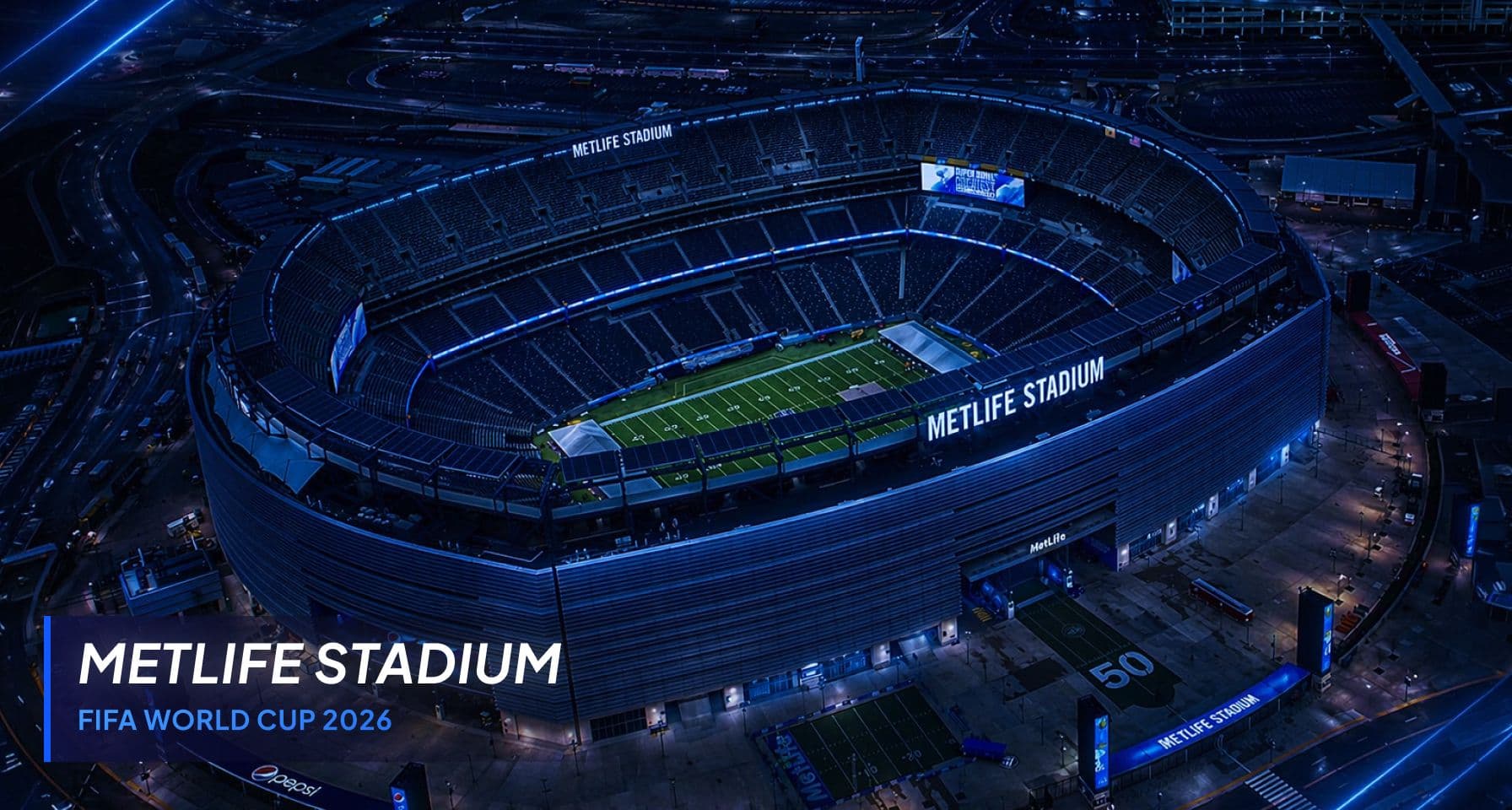
MetLife Stadium in East Rutherford is the New York, New Jersey giant that will stage the 2026 World Cup final. Opened in 2010 to replace the old Giants Stadium, it is shared by the NFL’s New York Giants and the New York Jets and seats just over 82,500 for football, making it the third‑largest of the 16 venues. For the 2026 tournament, it is set to host eight matches: five group‑stage fixtures, one Round of 32 knockout match, one Round of 16 tie, and the 19 July final.
Stadium info:
| Detail | Info |
|---|---|
Location | East Rutherford, New Jersey, USA |
Opened | 2010 |
Architect | 360 Architecture, EwingCole, Rockwell Group, Bruce Mau Design |
Capacity (football) | Around 82,500, making it one of the largest venues in the 16‑stadium line‑up |
Roof | Open air |
Main teams | New York Giants, New York Jets (NFL) |
Major events | Super Bowl XLVIII, major concerts, international friendlies, and the 2025 FIFA Club World Cup final |
2026 FIFA World Cup role | Hosts five group‑stage matches, one Round of 32 tie, one Round of 16 match and the 2026 World Cup final on 19 July |
👆 Fun facts & fan features
- MetLife’s biggest‑ever crowd topped 93,000 for a Talmud‑study celebration, beating both Ed Sheeran and Taylor Swift’s runs and showing how the bowl can stretch for huge‑scale events.
- The stadium has hosted Super Bowl XLVIII and massive summer‑tour concerts, so it is used to “world‑event”‑level logistics, media setups and the kind of hype that comes with the final-night nerves.
- In‑the‑round concert setups can squeeze extra fans into the bowl, turning the 360‑degree seats into a proper wall‑of‑sound surround for the final-night showpiece.
- The concourses roll out a wide range of grab‑and‑go options, from classic stadium fare to local New Jersey‑style deli‑heavy stands, which keep the queues manageably short on big‑match days.
- The Meadowlands Sports Complex sits close to the New Jersey highway network, so the stadium feels like a big-ticket suburban show rather than a tight city-centre football ground.
🪙 Getting to MetLife Stadium
The stadium sits in the Meadowlands Sports Complex, with fans typically travelling from New York City via New Jersey Transit trains and event‑day buses from Manhattan, plus large park‑and‑ride options around the complex for those coming in from the suburbs. Round-trip train tickets to MetLife Stadium will cost approximately $150, an elevenfold increase from the typical $12.90. A bus ride will set fans back $80.
📍 Address (for maps): 1 MetLife Stadium Drive, East Rutherford, NJ 07073
💰 How it plays for bettors
MetLife offers a big‑occasion feel without altitude or extreme heat, so the 90‑minute tension is mostly about nerves rather than conditions. That can make the markets lean towards cautious first‑half lines, with the draw priced around 2/1 in 90 minutes and the goal lines trimmed compared with the looser, more chaotic venues in the 16‑stadium line‑up.
The open‑air design and the lack of a roof mean the second-half pace can dip if the pitch is sun‑baked or the wind is swirling, which can favour tight scores in running markets and modest over-wraps late in the game rather than the big goal fests you see in the high altitude and fully roofed bowls. The final-night fixture here also tends to push the favourite backers towards the stronger side on the handicap, with the 19 July showpiece giving the field-side underdog a bit of a psychological lift from the sheer weight of expectation.
MetLife has seen more people reading the Talmud than watching Ed Sheeran, so trust me, the World Cup final won’t faze it. This is big‑game neutral football, where the nerves count more than the pitch‑figure or the altitude. Treat the draw around 2/1 as a live option in the first half, and keep the overs tight if the weather’s dry and the two sides tied together, nerves feel like the main show.
NRG Stadium (Houston Stadium): Houston, USA
NRG Stadium in Houston was the first NFL venue with a retractable roof and will be one of the key southern hubs for the 2026 World Cup. Opened in 2002, it is the home of the Houston Texans and sits within the wider NRG Park complex, which includes the famous Astrodome and the RodeoHouston grounds. For the 2026 FIFA World Cup, it is set to host seven matches: five group‑stage fixtures, one Round of 32 knockout and one Round of 16 clash, making it the Gulf Coast side showpiece of the tournament.
Stadium at a glance:
| Detail | Info |
|---|---|
Location | Houston, Texas, USA |
Opened | 2002 |
Architect | Populous with local partners |
Capacity (football) | Around 72,000 for the 2026 World Cup, making it the 8th‑largest of the 16 venues |
Roof | Retractable roof |
Main team | Houston Texans (NFL) |
Major events | Super Bowls, WrestleMania, major concerts and the Houston Rodeo |
2026 World Cup role | Hosts five group‑stage matches, one Round of 32 tie and one Round of 16 fixture on 4 July, which is the main event here |
👆 Fun facts & fan features
- RodeoHouston next door turns the surrounding area into a sea of cowboy hats, country grub and rodeo flags pre‑match, giving the stadium day a proper Texas flag festival feel
- The retractable roof and powerful air conditioning mean the bowl can feel like a chilled-out freezer in the middle of Houston's heat and humidity, a welcome relief when the pitch is baking outside.
- Texas BBQ and Tex‑Mex food stands line the concourses, with beef-heavy plates, enchiladas and local brews turning the walk to your seat into a calorie-warming, warm-weather fest.
- The 200‑seat press box “RodeoZone” and the other VIP‑laden areas mean the stadium is used to big‑ticket corporate and fan mix events, not just normal matchday crowds.
- The retractable roof, first for the NFL, gives NRG some bragging rights as a stadium development pioneer, even if pure aesthetics, fans still prefer the old‑school bowl style.
🚌 Getting to NRG Stadium: One NRG Park, Houston, TX 77054
NRG Stadium is located south of central Houston with road links and public transport connections into the wider NRG Park complex. The area regularly handles large crowds for NFL, rodeo and college events, so matchday operations are well-drilled.
💰 How it plays for bettors
Houston’s heat and humidity can sap legs, but the retractable roof and air‑conditioning reduce the worst extremes and keep conditions more consistent than at open-air-only bowls. That can tilt the markets slightly towards unders around 11/10 in slower, energy-sapping fixtures, especially when the afternoon kick-offs hit the mid‑summer heat‑waft window.
The roof also helps keep the pitch surface tighter and the tempo steadier, which can favour cautious score in‑play picks rather than the big‑goal‑explosions you see in the high‑altitude or full-exposed wind-driven venues. The Round of 16 fixture here tends to lean towards a more even‑score window than the later‑round‑nerves games, so late in‑play overs and both teams to score at evens are worth a look when the visitors are ready to hit the hosts on the break.
Houston heat in a fridge; that’s the NRG deal. The air‑conditioning keeps the legs fresh, but the brains can still melt when the tempo’s up, so back the unders around 11/10 when the game feels like a slow-burning grind. If the visitors are ready to ride the press and pop the host side on the break, that’s when the value in the second‑half‑over‑window and the BTTS at evens usually hides.
SoFi Stadium (Los Angeles Stadium): Inglewood, USA
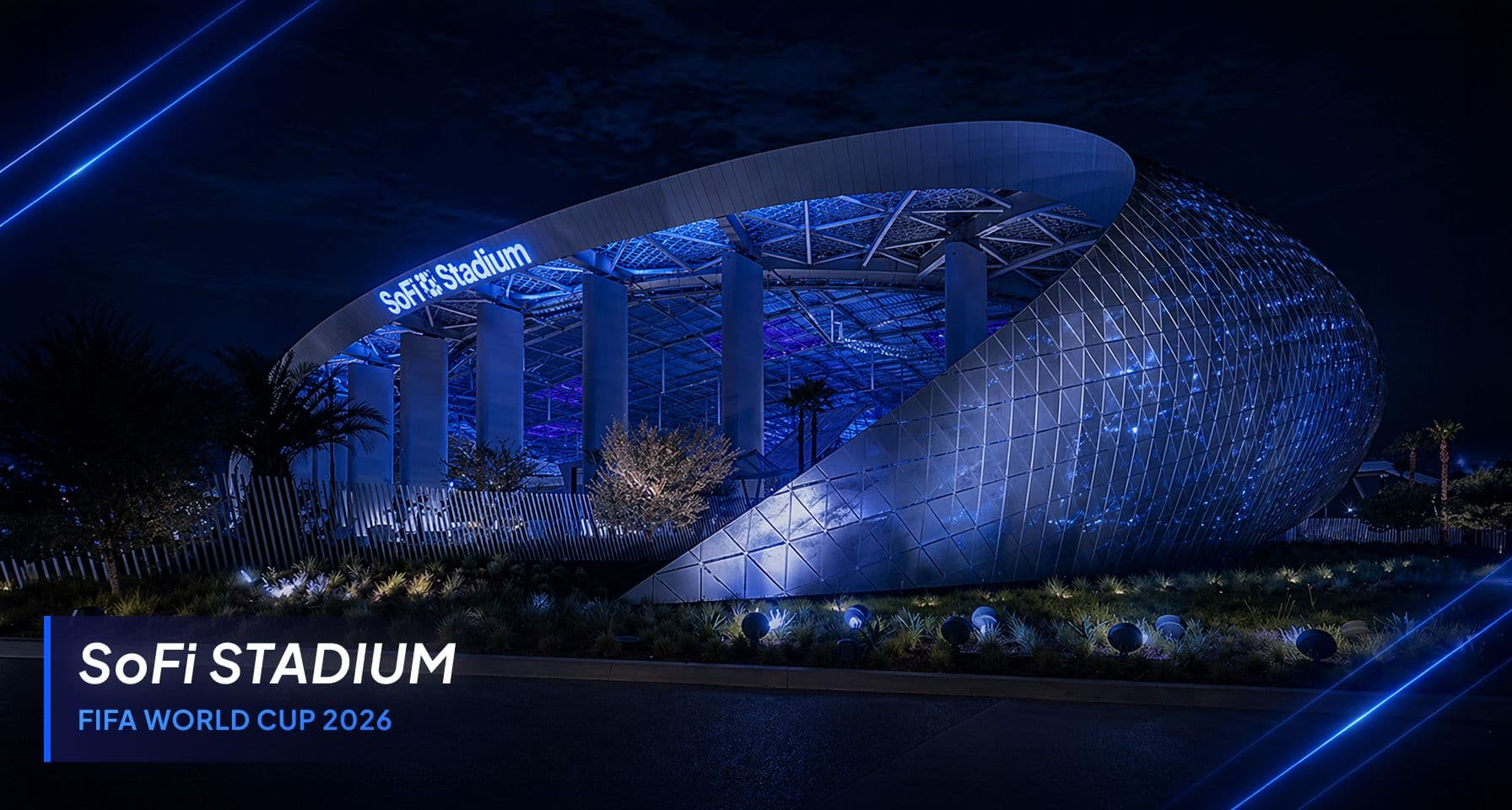
SoFi Stadium in Inglewood is one of the newest and most spectacular venues in the world, built as a vast sports and entertainment complex near LAX. Opened in 2020, it is home to the Los Angeles Rams and Los Angeles Chargers and has already staged Super Bowl LVI, a College Football National Championship and major concerts. It will host multiple 2026 World Cup matches under its huge translucent canopy.
Stadium at a glance:
| Detail | Info |
|---|---|
Location | Inglewood, California, USA |
Opened | 2020 |
Architect | HKS, Inc. |
Capacity (football) | Around 70,240, with temporary seats able to push numbers over 100,000 for major events, used at roughly 70,000 to 72,000 for the 2026 World Cup, making it the 9th‑largest of the 16 venue |
Roof | Fixed translucent canopy covering the stadium and the main plaza, not a full dome roof |
Main teams | Los Angeles Rams, Los Angeles Chargers (NFL) |
Major events | Hosted Super Bowl LVI, college football national championship, 2023 CONCACAF Gold Cup matches |
2026 World Cup role | Hosts five group‑stage matches, one Round of 32 tie, one Round of 16 clash and the high‑profile Mexico vs Japan slot on 2 July, giving it a packed, prime‑time schedule |
👆 Fun facts & fan features
- Concession areas are themed after LA streets such as Fairfax, Olvera, San Vicente and Sawtelle, serving Mexican‑inspired plates, Asian‑fusion bites and classic stadium grub, which keeps the walk to your seat a proper taste test.
- Dozens of bars and branded spaces like the Corona Beach House give you plenty of places to knock back a drink before the teams run out, without feeling like you are stuck in one tiny pub alley.
- Mobile ordering and autonomous grab‑and‑go stores mean you can tap in, grab food and drink, and walk straight out, cutting queues and keeping you in your seat unless the xG graphic is too painful to watch.
- The canopy and the open side towards the city skyline give the bowl a light‑filled, almost open-air feel during the day, but with the weather protection you get from a covered venue.
🛬 Getting to SoFi Stadium: 1001 Stadium Dr, Inglewood, CA 90301
SoFi sits on the former Hollywood Park Racetrack site, a short distance from Los Angeles International Airport, with shuttle services, rideshare zones and improved transit links feeding into the complex. The wider Hollywood Park development adds retail and entertainment around the ground, so matchdays feel like a full-day out rather than a quick stadium hop-in, hop-out.
💰 How it plays for bettors
With its canopy and the mild LA climate, SoFi offers near‑perfect playing conditions that favour technical, possession-based sides and smooth ball movement. That can make overs markets around 10/11 look juicy when two strong‑attacking teams meet, with the pitch and the protection from the elements helping to keep the tempo high and the errors low.
The modern surface and the lack of weather‑chaos can also give underdogs on the Asian handicap some hope in high‑tempo matches, where quality can punish any tiny lapse at the back. The Mexico vs Japan fixture here is likely to be a fast‑paced, front‑foot‑style clash, which keeps both teams to score at evens and makes the late-in-play window interesting if the market is pricing it as a tight game.
SoFi might be the first ground where your half‑time xG for food beats the xG on the pitch. The place is built for overs, on calories and on goals, so back the overs around 10/11 when the attacks are big, the pitch is slick, and the roof is keeping the LA‑smog‑heat out of the bowl. If the visitors are ready to ride the tempo, that’s when the Asian‑handicap underdog edge usually pops.
Betting the Venues: Edges & Odds Formats
Atmospheres shift lines as much as the numbers do. Arrowhead’s 142‑dB roar can nudge home‑goal expectations up by a few per cent, Azteca’s altitude can push late‑game overs higher, and domed venues like AT&T Stadium and Mercedes‑Benz Stadium strip away the weather chaos, which can tilt totals markets tighter. The key is to cluster your thinking, not just the markets.
- Roofed / retractable‑roof venues (9 of 16):
Audiences and pitch conditions are steadier, so unders often sit around 5/6 to 6/5 when the game is tight, and the first half is more controlled. Think AT&T Stadium, NRG Stadium, BC Place, Mercedes‑Benz Stadium and Lumen Field as the main “settled‑conditions” pools. - Open‑air, high‑altitude venues (Mexico‑zone):
Thin air and the weight of expectation can favour overs around evens in lively group‑stage ties, especially when the visiting team starts to fade in the second half. Estadio Azteca and Estadio Akron are the prime examples here. - Cold/wet, open‑air venues (US North‑East / Pacific):
Wind and damp can nudge low‑scoring lines higher, with the UK‑style books pricing the under‑2.5 around 6/5 when the pitch is slick and the pace is slow. GEHA Field at Arrowhead and Gillette Stadium lean that way, as does Lumen Field when the rain is falling. - Odds formats and book differences:
- UK punters will see many of these edges framed in fractional odds, such as 10/11 on overs, 4/6 on strong favourites and 11/10 on underdog-style overs.
- US punters will see the same ideas as moneylines, with strong favourites often around minus 150 and the draw priced at similar implied probability to 2/1 fractional.
- Canadian‑style markets often mirror puck‑line logic, with tight handicaps and clear under-2.5 / over‑2.5 splits.
- Patterns worth tracking:
- Group‑stage teams rotate and manage, so the big-name sides often field a mix of veterans and fringe players, which can open up both‑teams‑to‑score and late‑over‑windows.
- Cup‑shock matches at compact, loud grounds like Arrowhead, MetLife, or Azteca can offer value on the underdog if the price drifts after the first-half scoreline.
- Models often miss the crowd‑xG effect, so the locals’ edge is real, especially in the late‑stage knockout-game window. Treat it like a Champo-style run-in in April: back the grafters, not the fluff.
| Bet Type | Top Stadiums | Odds Example |
|---|---|---|
Overs 2.5 | Azteca, Arrowhead | 4/5 to 1/1 |
Unders | AT&T, NRG | 5/6 to 6/5 |
Home Win | BBVA, Akron | 4/6 |
Draws | MetLife, BC Place | 3/1 to 12/5 |
Fancy a trip? Check our 2026 World Cup Host Cities guide.
Interested in match predictions? Check out our 2026 World Cup Betting Tips - we offer insights to every game during the whole tournament!
Further stadium information can be found at https://fifaworldcup26.suites.fifa.com/venues/
2026 World Cup Stadiums FAQ
Opening ceremony at Estadio Azteca, Mexico City, on 11 June 2026 (Mexico's group opener). Closing ceremony at MetLife Stadium, East Rutherford, ahead of the final on 19 July 2026. Azteca becomes the first stadium for 3 WC openers (1970, 1986, 2026).
16 total: 11 USA, 3 Mexico, 2 Canada. Largest: AT&T Stadium (94k). Smallest: BMO Field (45k expanded).
MetLife Stadium (New York New Jersey Stadium), 82.5k capacity. Also hosts 7 other matches.
9/16 have roofs or canopies: AT&T, Mercedes‑Benz, NRG, BC Place (retractable); SoFi (canopy). Impacts overs/unders betting.
Only Estadio Azteca (1970/1986 openers & finals). All others are new to the senior men's WC.
~68,000 across 16 venues. Fits expanded 48‑team, 104‑match format.
Altitude venues (Azteca, Akron) for Mexico overs 4/5. Loud US bowls (Arrowhead, Lumen) boost home edges 6/5. Domes (AT&T) unders 5/6. Check our [2026 World Cup betting hub].
Most within 30 to 60 mins of major airports (LAX to SoFi 15 mins, JFK to MetLife 45 mins). Full transit in each venue guide above. Cross‑link to [host cities page].
Yes, trilingual (English/Spanish/French) for global fans. Digital screens support multiple languages.